Africa Bitumen Market
Africa Bitumen Market Update : From Pre-War Balance to Today’s Fragile Stabilization
Between 20 February and 24 April 2026, the African bitumen market moved from a relatively balanced environment into an exceptional price shock triggered by war-related disruptions, and is now entering a stabilization phase with continued volatility.This period has clearly highlighted the different market behavior across East and West Africa, while showing the strategic importance of...

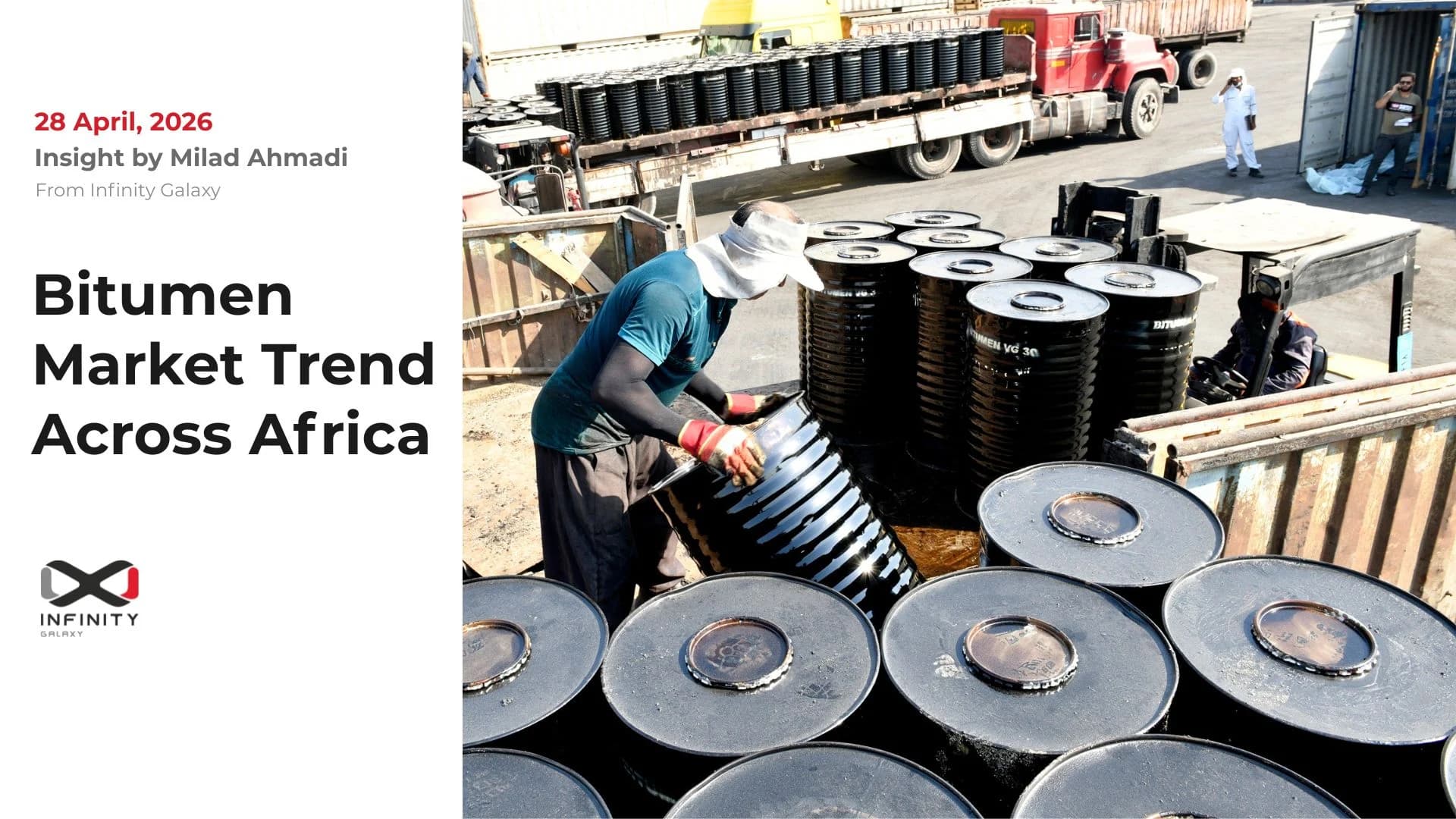
Between 20 February and 24 April 2026, the African bitumen market moved from a relatively balanced environment into an exceptional price shock triggered by war-related disruptions, and is now entering a stabilization phase with continued volatility.
This period has clearly highlighted the different market behavior across East and West Africa, while showing the strategic importance of key markets such as Kenya, Tanzania, Nigeria, South Africa, Angola, and Congo.
Kenya and Tanzania Under Direct Supply Shock Pressure
In East Africa, especially Kenya and Tanzania, bitumen prices rose from around USD 447–457 in February to nearly USD 818–828 in April, representing an increase close to 80%.
This sharp rise was mainly driven by the region’s strong dependence on supply from the Persian Gulf. When war conditions disrupted flows, Iranian exports slowed and shipping routes were affected, creating a real shortage of available cargoes.
Unlike a normal price rally, East Africa faced physical supply pressure.
Although geopolitical pressure has eased slightly, prices remain elevated as freight costs, insurance premiums, and supply risks have not fully normalized.
Market View:
East Africa remains sensitive to any disruption in Middle East supply flows. Buyers should monitor freight and cargo availability closely.
Nigeria and Angola Between Real Demand and Price Correction
West Africa is already reflecting the upward trend, with prices remaining elevated despite minor short-In West Africa, especially Nigeria and Angola, prices increased from around USD 530–540 to USD 734–744, a rise of approximately 35% to 40%.
However, unlike East Africa, this market entered a correction phase earlier.
The main reasons were broader sourcing options from the Mediterranean, Europe, and Asia, together with stronger access to bulk cargo flows.
At the same time, active infrastructure projects in Nigeria have helped preserve demand and prevented a full slowdown.
Market View:
West Africa currently offers more sourcing flexibility, but demand-led support remains strongest in Nigeria.
South Africa with Gradual Increase Led by Import Costs
The South African market followed a different path during the war and post-conflict period. Price increases were more gradual and mainly linked to rising import and logistics costs rather than a sudden shock.
Seasonal rainfall and project delays limited short-term demand, but global replacement costs gradually pushed domestic prices higher.
Market View:
South Africa may see firmer demand once weather-related delays ease.
Congo and Other Markets: Availability Is More Important Than Price Direction
In markets such as Congo, trading conditions have depended more on cargo availability than headline price trends.
Before the war, these markets often benefited from surplus European supply. After the conflict began, reduced cargo availability and stronger competition for prompt shipments sharply changed pricing conditions.
These markets are now more dependent than ever on fast access to reliable suppliers.
Market View:
In smaller African markets, securing product on time can be more valuable than waiting for a lower number.
Africa Market Summary
The African bitumen market has passed through three clear stages:
- Pre-War period: Stable prices with moderate demand
- War Shock Phase: Sharp price jump driven by supply disruption and higher oil values
- Current Phase: Partial price easing, but stabilization at elevated levels with ongoing risk
The market has not returned to pre-war conditions. Purchasing decisions remain highly dependent on timing, freight conditions, and access to real supply.
Final Message for Buyers
Today’s African market requires sharper timing than ever before.
The clear difference between East and West Africa shows that one buying strategy cannot fit all markets.
Access to current information, understanding supply flows, and choosing the right purchasing window are now the key drivers of successful procurement.
For country-specific guidance, updated offers, and the right buying window for your market, connect directly with Milad Ahmadi, Africa market specialist at Infinity Galaxy.
Comments
Share your thoughts...
More Reports
Curious to see more, discover more articles, and stay up-to-date?