Bitumen Emulsion
Bitumen Emulsion: Definition, Composition, Grades and Specification
Last updated: October 2026 | Bitumen emulsion is bitumen mixed with water and an emulsifier, so it stays liquid and can be applied cold. Learn its composition, how it sets, ASTM and IS grade specs, main uses and storage rules.


- What Is Bitumen Emulsion?
- Bitumen Emulsion vs Ordinary Bitumen
- What is Bitumen Emulsion Composition?
- How is Bitumen Emulsion Manufactured?
- Types of Bitumen Emulsion at a Glance
- What Factors are Important in Grading Bitumen Emulsion?
- Bitumen Emulsion Application
- Advantages of Bitumen Emulsion to Cut Back
- Disadvantages of Bitumen Emulsion
- How to Store Bitumen Emulsion
- Bitumen Emulsion Standard
- Bitumen Emulsion Standard
- Bitumen Emulsion Packaging
- FAQ
- Infinity Galaxy, Bitumen Emulsion Supplier
Bitumen emulsion is a liquid made of tiny bitumen drops spread in water with the help of an emulsifier. You may also see it called emulsion bitumen, bituminous emulsion, emulsified bitumen or asphalt emulsion. Because this binder is liquid at normal temperature, crews can spray or mix it cold, so it needs much less heat than ordinary bitumen.
This guide explains what is inside the emulsion, how it turns back into solid bitumen on the road, and how the main grades are tested. You will also find specification tables for ASTM, AASHTO and Indian standards, plus the main uses, limits and storage rules.
What Is Bitumen Emulsion?
Bitumen emulsion is a mix of bitumen and water. Since bitumen and water do not mix naturally, a small amount of emulsifier keeps the bitumen evenly dispersed in the water. This creates a smooth liquid that can be pumped, stored, and applied without the high temperatures normally needed for bitumen.
The reason for making bitumen emulsion is simple. Ordinary bitumen is very thick and usually needs strong heating before it can be sprayed or mixed. Bitumen emulsion makes the binder easier to handle at much lower temperatures. After application, the water separates from the mix, leaving the bitumen on the surface to form a strong and durable layer.
This makes bitumen emulsion useful for tack coats, chip seals, slurry seals, and cold mixes. It is also used in waterproofing and pipe coating. You can see the full list in the application section below.
Bitumen emulsion at a glance
| Point | Quick answer |
|---|---|
| What it is | Bitumen drops dispersed in water with an emulsifier |
| Bitumen content | Usually 55–65% (can range from about 50% to 70%) |
| Water content | Usually 35–45% |
| Emulsifier | Usually less than 1% of the weight |
| Charge on the drops | Positive (cationic), negative (anionic) or neutral (non-ionic) |
| Setting speed | Rapid (RS), medium (MS) or slow (SS) |
| Main uses | Tack coat, prime coat, fog seal, chip seal, slurry seal, cold mix, waterproofing |
| Main standards | ASTM D977, ASTM D2397, AASHTO M 140, AASHTO M 208, IS 3117, IS 8887, EN 13808 |
Bitumen Emulsion vs Ordinary Bitumen
Bitumen emulsion is not a different material. It is ordinary bitumen in a different form, so the base bitumen is the main ingredient of every emulsion. The difference is that bitumen is a thick, semi-solid binder, while emulsion is a thin liquid made by dispersing bitumen in water.
| Point | Ordinary bitumen | Bitumen emulsion |
|---|---|---|
| Source | Refinery distillation of crude oil | Bitumen + water + emulsifier |
| State at room temperature | Semi-solid, very thick | Liquid |
| Heating before use | Strong heating needed | None for most grades; mild warming for thick grades such as RS-2 |
| Water content | Almost none | 35–45% |
| How it hardens | By cooling | By losing water (breaking and curing) |
| Main role | Main binder in hot-mix asphalt | Bonding, sealing, cold mixes and recycling |
| Wet surfaces | Poor adhesion | Cationic types adhere well to wet stone |
In short, hot bitumen builds the main pavement layers, and emulsion usually bonds, seals or protects them. For more on the base material, see our guide to bitumen.
What is Bitumen Emulsion Composition?
Every bitumen emulsion has three main parts: bitumen, water and an emulsifier. Most road emulsions hold 55–65% bitumen and 35–45% water. The emulsifier is only a tiny part of the weight, but without it the oil and water would separate in minutes.
This is also why people call it a water-based bitumen emulsion. Water is the carrier, so no petroleum solvent is needed to make the bitumen thin.
-The Main Ingredients:
| Component | Typical share | What it does |
|---|---|---|
| Bitumen | 55–65% | Stays on the road as the binder after the water leaves. Harder base bitumen is used for "h" grades |
| Water | 35–45% | Carries the bitumen drops and makes the mix liquid |
| Emulsifier | Usually below 1% | Keeps the drops apart, gives them their charge and controls how fast the emulsion sets |
| Additives (optional) | Small amounts | Polymers or latex for strength, acid for cationic emulsifiers, stabilizers, and sometimes a little flux oil |
What Does a Bitumen Emulsifier Do?
Emulsifiers are used for making a mixture of water and oil dispersed in each other.
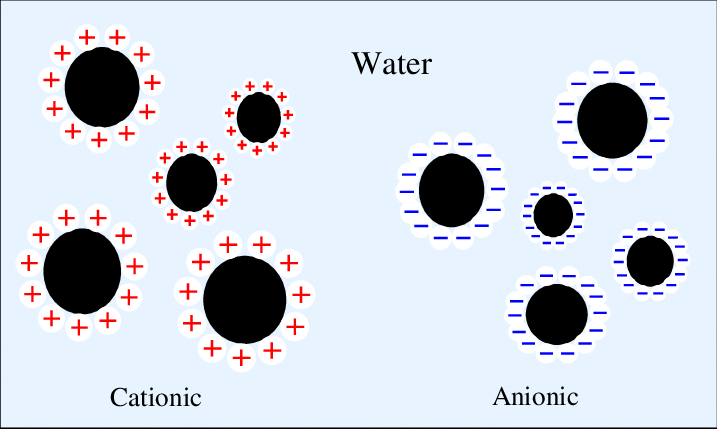
In addition to their ability to reduce the tension between oil and water molecules, emulsifiers have an electronic charge that affects the molecules of bitumen emulsion and leads to categorizing it into Cationic and Anionic.
Cationic emulsifiers, for example, form a layer of positive charge around the bitumen droplets that prevent them from joining each other.
This makes bitumen dispersion in water more durable.
| Emulsifier type | Common chemicals | Charge on drops | Typical emulsions |
|---|---|---|---|
| Cationic | Fatty amines, amidoamines, imidazolines, quaternary ammonium salts (made water-soluble with acid) | Positive | CRS, CMS, CSS |
| Anionic | Fatty-acid soaps from tall oil or rosin, made with caustic soda or potash | Negative | RS, MS, SS, HF grades |
| Non-ionic | Ethoxylated alcohols or phenols, often with other emulsifiers | Neutral | Special uses, rare on roads |
| Clay (mineral) | Bentonite | Depends on the system | Industrial coatings and roofing |
Why Charge Matters: Cationic and Anionic
The electronic charge of bitumen emulsion decides on what kind of surface it should be used.
Some aggregates (such as marble aggregates) mix well with anionic bitumen emulsion and some others are a better solution to cationic bitumen emulsion (such as granite aggregates).
For a full comparison, read our guides to cationic bitumen emulsion and to the different types of bitumen emulsion.
How Does Bitumen Emulsion Break and Set?
When bitumen emulsion is applied to stone or a road surface, it goes through three main stages.
First, it is stable, with the bitumen droplets dispersed in water.
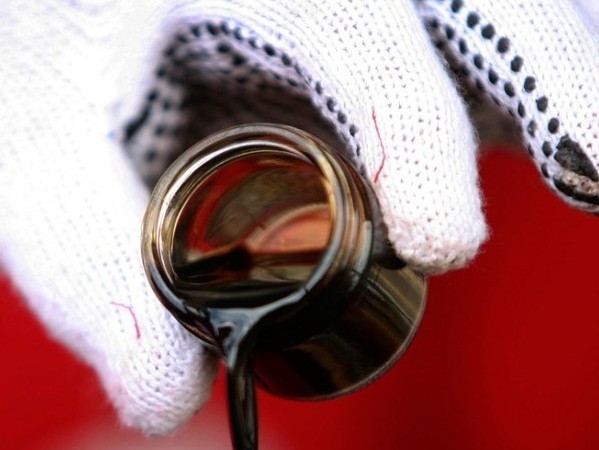
Then it breaks as the water separates and the droplets come together to form a continuous bitumen film. At this stage, the emulsion changes from brown to black.
Finally, the remaining water evaporates and the bitumen film gains its final strength.
The material left on the surface after the water has separated is called the residue. Most specification limits, including penetration and ductility, are measured on this residue because it is the part that does the real work.
Setting speed is not fixed. It changes with the weather and the stone, so the same emulsion can break in minutes on a hot, dry day and take hours on a cold, humid one. Because of these factors, choose the grade for the job and the weather, not only for the price.
| Factor | Effect on breaking |
|---|---|
| Hot, dry, windy weather | Water leaves faster, so breaking is quicker |
| Cold or humid weather | Breaking is slower |
| Fine dust and fines on the stone | More surface area makes breaking faster |
| Emulsifier dose | More emulsifier makes the emulsion more stable and slower |
| Thick film | Takes longer to dry through |
| Rain before breaking | Can wash the emulsion off the surface |
How is Bitumen Emulsion Manufactured?
Bitumen emulsion is usually made in a colloid mill. Hot bitumen and a warm water solution of the emulsifier are pumped into the mill together. A fast-spinning rotor tears the bitumen into very small droplets, and the emulsifier covers each droplet right away so they cannot rejoin.
Plant operators control a few things closely: droplet size, the dose of emulsifier and the temperature of each stream. Smaller droplets with a narrow size range give a thicker, more stable emulsion. After milling, the emulsion is cooled and sent to storage.
For the full process, see our bitumen emulsion production process article.
Types of Bitumen Emulsion at a Glance
Emulsions are sorted in two ways: by the charge on the drops, and by how fast they break. Cationic emulsions start with the letter C. Anionic emulsions have no prefix, so RS-1 is anionic and CRS-1 is cationic.V
| Setting speed | Anionic grades | Cationic grades |
|---|---|---|
| Rapid setting (RS) | RS-1, RS-2, HFRS-2 | CRS-1, CRS-2 |
| Medium setting (MS) | MS-1, MS-2, MS-2h, HFMS-1, HFMS-2, HFMS-2h, HFMS-2s | CMS-2, CMS-2h |
| Slow setting (SS) | SS-1, SS-1h | CSS-1, CSS-1h |
The numbers and letters after the setting speed give extra detail. The number 1 means lower viscosity and 2 means higher viscosity. The letter "h" means a harder base bitumen, "s" means a softer one, and "HF" means high float, a grade with a gel-like film that resists oxidation. European-style K grades, such as K1-60 and K1-70, are cationic rapid-setting emulsions that are in strong demand in Africa and the Gulf region.
Which type is best for which job, and what each name stands for, is explained in our full guide to the types of bitumen emulsion.
What Factors are Important in Grading Bitumen Emulsion?
Bitumen emulsion grades are determined by two groups of tests: tests on the emulsion itself and tests on the bitumen residue left after the emulsion breaks. The first group shows how the emulsion will behave during storage, pumping, and application. The second shows the properties of the bitumen after it has been applied.
Viscosity is affected mainly by bitumen content and droplet size. In general, higher bitumen content and smaller droplets produce a thicker emulsion. The required viscosity also depends on the aggregate. Dense-graded aggregate usually needs a lower-viscosity emulsion so it can spread and coat the particles evenly. Open-graded aggregate generally needs a higher-viscosity emulsion to reduce drainage.
For test methods and procedures, see our bitumen emulsion tests guide.
| Test | What it tells you | Typical limit |
|---|---|---|
| Viscosity (Saybolt Furol) | How easily the emulsion flows and how well it can be sprayed and coats | RS-1: 20–100 s at 25 °C |
| Residue by distillation | How much bitumen remains after the water and other volatile components are removed | 55–65% minimum, depending on the grade |
| Sieve test | Whether the emulsion contains lumps or large particles that could block spray nozzles | 0.10% max. (ASTM); 0.05% max. (IS 8887) |
| Storage stability (24 h) | Whether the bitumen droplets remain evenly dispersed during storage | 1% max. (ASTM); 1–2% (IS 8887) |
| Particle charge | Whether the emulsion is cationic or anionic | Cationic: positive. Anionic: negative |
| Demulsibility | How quickly the emulsion breaks under specified test conditions | RS-2: 60% min. |
| Penetration of residue | How hard the bitumen is | 100–200 (soft) or 40–90 ("h" grades) |
| Ductility of residue | How far the recovered bitumen can stretch before breaking | 40 cm min. (ASTM) |
Bitumen Emulsion Application
In the early 20th century, bitumen emulsions were used mainly for spray applications, but nowadays they are also used for mixing and spraying in road construction and road maintenance. The table shows the most common ones and the grades usually chosen.
| Use | What it is | Common grades | Good to know |
|---|---|---|---|
| Tack coat | A thin sticky layer between old and new asphalt | SS-1h, CSS-1h, CRS-1 | SS grades are often diluted with about the same amount of water. Let the emulsion break (turn black) before paving |
| Prime coat | Seals and binds a granular base before asphalt goes on | SS-1, CSS-1 (diluted), special prime emulsions | Needs time to soak into the base |
| Fog seal | A light spray that seals an old, dry surface | SS-1h, CSS-1h (diluted) | Stops oxidation and loose stone, but adds no strength |
| Chip seal | Emulsion sprayed first, then one layer of stone | RS-2, CRS-2, HFRS-2 | A low-cost way to protect and waterproof low-traffic roads |
| Slurry seal | A mix of emulsion, fine stone and filler spread on the surface | CSS-1h, SS-1h | Gives a uniform texture and seals the surface |
| Micro surfacing | A stronger slurry made with polymer-modified emulsion | Polymer-modified quick-set emulsions | Applied with a machine that mixes on site; handles more traffic than slurry seal |
| Cold mix and cold recycling | Emulsion mixed with stone or old asphalt without hot heating | MS-2, CMS-2, HFMS-2, CSS-1 | Common for patching and base repair |
| Waterproofing and coatings | Thin coats on pipes, metal and concrete | CSS-1, SS-1 | Check that the surface is clean and the coating is fully cured |
| Dust control | Light spray on soil or gravel roads | Diluted SS-1 | Short-term fix |
Must read: A review of different types of bitumen used for road construction
Advantages of Bitumen Emulsion to Cut Back
Cutback bitumen is bitumen diluted with a petroleum solvent such as kerosene, naphtha, or diesel. Bitumen emulsion can be used for many of the same applications, but it uses water instead of a petroleum solvent to make the bitumen easier to handle and apply.
| Point | Bitumen emulsion | Cutback bitumen |
|---|---|---|
| What thins the bitumen | Water | Petroleum solvent |
| Typical mix | About 60% bitumen, 40% water | About 70% bitumen, 30% solvent |
| Fire risk | Not flammable | Flammable |
| Heating | None to mild | Often needed |
| Wet surfaces | Cationic grades bond well to Wet stone | Poor bond on wet stone |
| Fumes and environment | Low solvent fumes | Strong fumes released as solvent evaporates |
| Cost of the carrier | Water is cheap | Solvent costs more than water |
Bitumen emulsion also allows many applications with little or no heating. This can reduce energy use and make handling easier. Its low viscosity allows it to spread and coat aggregate effectively, while the water separates after application and leaves the bitumen behind.
For a deeper comparison, see our guide on emulsion and cutback differences, our page on cutback bitumen, and the full list of advantages and disadvantages of bitumen emulsion.
Disadvantages of Bitumen Emulsion
Bitumen emulsion is easier and safer to handle than cutback bitumen in many applications, but it also has some limitations. Most are related to its water content: the water must separate and leave the emulsion before the bitumen can form a continuous film.
| Limit | Why it happens | How to manage it |
|---|---|---|
| Slow breaking in cold or humid weather | Water cannot leave quickly | Work in warm, dry weather or choose a rapid-setting grade |
| Washes off in rain | It has not broken yet | Check the forecast before spraying |
| Ruined by freezing | Ice damages the droplet film, and the emulsion separates for good | Store in a frost-free place |
| Settling and limited shelf life | Drops slowly sink over time | Store correctly, stir gently and test old stock |
| Wrong stone and emulsion pair | A charge mismatch gives poor coating | Pick cationic or anionic by stone type and run a lab compatibility test |
| Water adds freight weight | 35–45% of what you ship is water | Buy in bulk or source close to the site |
How to Store Bitumen Emulsion
Storage mistakes are the most common reason an emulsion breaks before use. The basic rules are simple. Keep it from freezing, because ice destroys the emulsion for good. Do not overheat it either, since too much heat boils off water and makes a skin.
Keep air and foreign material out of the tank. A vertical tank is better than a horizontal one, because it exposes less surface to the air. Never mix anionic and cationic emulsions in the same tank or pump line, because opposite charges make them break at once.
If stock has been stored for a long time, check it before use with a quick sieve test and a look for water separation or lumps. For tank, heating and pumping details, read our guide on storage and handling of bitumen emulsion.
Bitumen Emulsion Standard
Bitumen Emulsion Standard
Most countries follow or adapt the American standards. In the US, ASTM International and AASHTO publish the main specifications. Other countries then adjust them to local conditions. In India, for example, BIS has its own standards for each charge type, and in Europe, CEN uses a class-based framework.
| Standard | Region | What it covers |
|---|---|---|
| ASTM D977 / AASHTO M 140 | USA | Anionic emulsified asphalt |
| ASTM D2397 / AASHTO M 208 | USA | Cationic emulsified asphalt |
| ASTM D244 / AASHTO T 59 | USA | Test methods for emulsified asphalt |
| IS 3117:2004 | India | Anionic bitumen emulsion for roads |
| IS 8887:2018 | India | Cationic bitumen emulsion for roads |
| EN 13808:2013 | Europe | Framework for cationic bituminous emulsions |
EN 13808 works differently from the others. It gives a list of classes for each property, and users choose the ones they need. A name such as C60B3 then reads as: C for cationic, 60 for the binder content in percent, B for bitumen binder and 3 for the breaking class.
Bitumen Emulsion Packaging
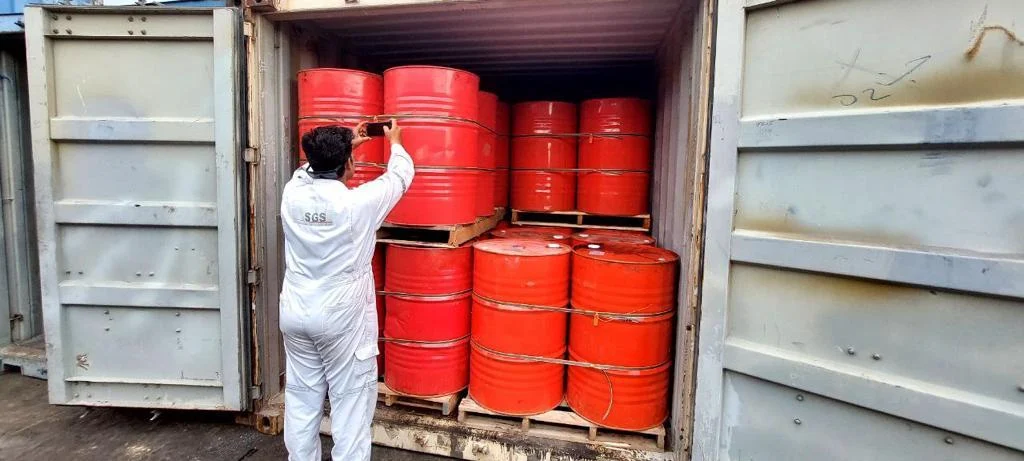
For bitumen emulsion, there are several types of packaging, including :
- Barrel
- IBC
- Flexi tank
- Reconditioned drums
- New Steel Drum
Other types of packing is not suitable for bitumen emulsion, but Infinity Galaxy provides your desired bitumen emulsion in the above packing.
FAQ
What is the difference between bitumen and bitumen emulsion?
Bitumen is a thick, semi-solid binder made at the refinery. Bitumen emulsion is the same bitumen spread in water with an emulsifier, so it is a thin liquid. This means emulsion can be applied cold or with mild warming, while ordinary bitumen needs strong heating.
What is bitumen emulsion used for?
It is mainly used for tack coats, prime coats, fog seals, chip seals, slurry seals, micro surfacing and cold mixes in road work. It is also used for waterproofing and coating pipes and metal, and for dust control on unpaved roads.
What does a bitumen emulsifier do?
An emulsifier lowers the tension between bitumen and water, so the bitumen can break into tiny drops. It also gives each drop an electric charge so the drops push away from each other and stay stable. The type and dose of emulsifier also decide the setting speed.
Do bitumen emulsions need to be heated before use?
Most grades do not. SS and cationic slow-setting grades are used at normal temperatures, often diluted with water. Thicker grades such as RS-2 and CRS-2 are usually warmed so they spray evenly.
Are there polymer-modified bitumen emulsions?
Yes. Polymers or latex can be added to the bitumen or to the emulsion to improve strength at high temperature and resistance to fatigue and rutting. Micro surfacing, for example, uses polymer-modified quick-set emulsion.
Are bitumen emulsions environmentally friendly?
They are friendlier than cutback bitumen, because the carrier is water, not petroleum solvent. Fumes are much lower, and there is less fire risk. Some grades still contain a small amount of oil distillate, so check the product data sheet.
Is bitumen emulsion waterproof?
Yes, once it has fully cured. After the water leaves, the bitumen film is waterproof and is used as a coating on concrete, metal and pipes. Allow enough time to cure before water or traffic touches it.
How do I know if the emulsion has gone bad?
A broken emulsion shows water separated from the bitumen, lumps, or a skin on top. A sieve test will show lumps that could block spray nozzles. Emulsion that froze should not be used.
Can I mix anionic and cationic emulsions?
No. Opposite charges make the drops attract each other, and the emulsion breaks right away. Use separate tanks, hoses and pumps, or clean them fully between products.
Is bitumen emulsion better than cutback bitumen?
For most road jobs it is, because it is not flammable, creates fewer fumes and costs less to thin. Cutback can still be used in cold weather where an emulsion would break too slowly.
Which bitumen emulsion types are most in demand?
Our sales data shows CSS-1, RS-1, RS-2, CRS-1, K1-60 and K1-70 as the most requested grades. East Asia buys the most CSS-1 and CRS-1, while Africa, Qatar and the Persian Gulf countries buy the most K1-60 and K1-70.
What is non-ionic bitumen emulsion?
In non-ionic emulsions the drops carry no electric charge. Mineral emulsifiers such as bentonite are sometimes used. This type is not common in road construction.
Infinity Galaxy, Bitumen Emulsion Supplier
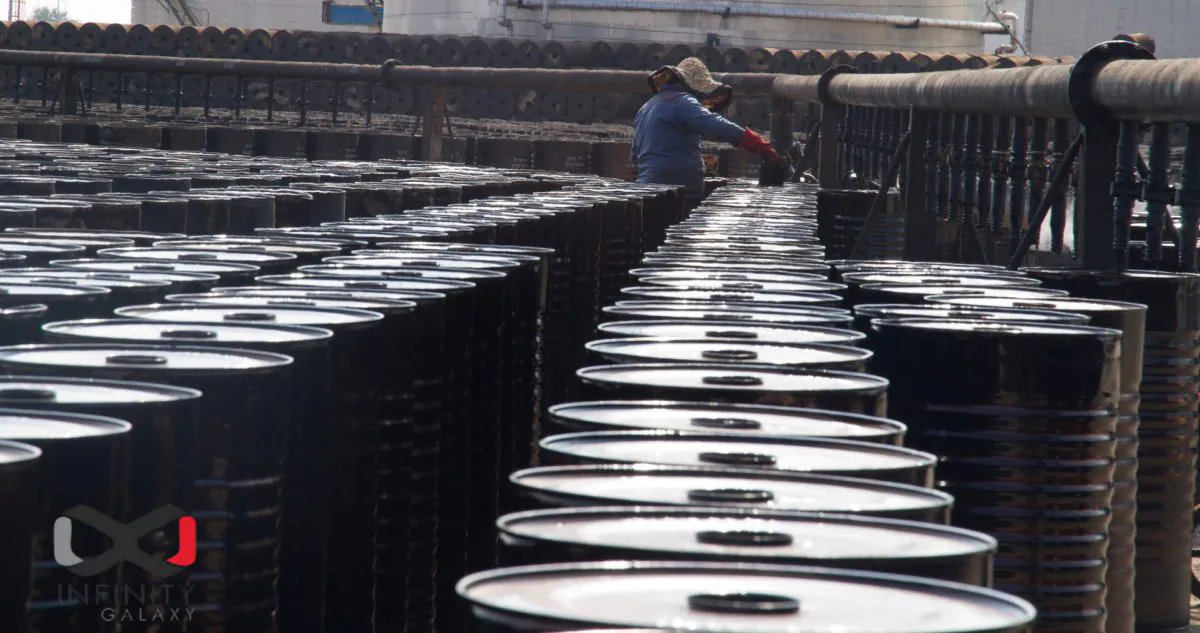
The international bitumen emulsion supplier, Infinity Galaxy, is sending thousands of tones of bitumen emulsion in barrels to important ports around the world.
Infinity Galaxy built its business on values such as high quality products, competitive pricing, satisfied customers, and efficient logistic services.
We can pack and export your needed bitumen in the shortest possible amount of time.
If you want to know more about bitumen emulsion and the purchasing terms, you can contact us or fill out our inquiry forms.
Comments
Share your thoughts...
Latest
From the blog
Curious to see more, discover more articles, and stay up-to-date?