Africa Bitumen Market
Africa Bitumen Market Enters Rebalancing Phase
Based on the latest market reports, the African bitumen market has entered a phase where looking at price numbers alone is no longer enough.In some trade routes, prices have corrected lower, but freight risk, supply limitations, and delivery timing are still keeping purchasing decisions highly sensitive.According to reports from international industry publications, commercial traffic through...

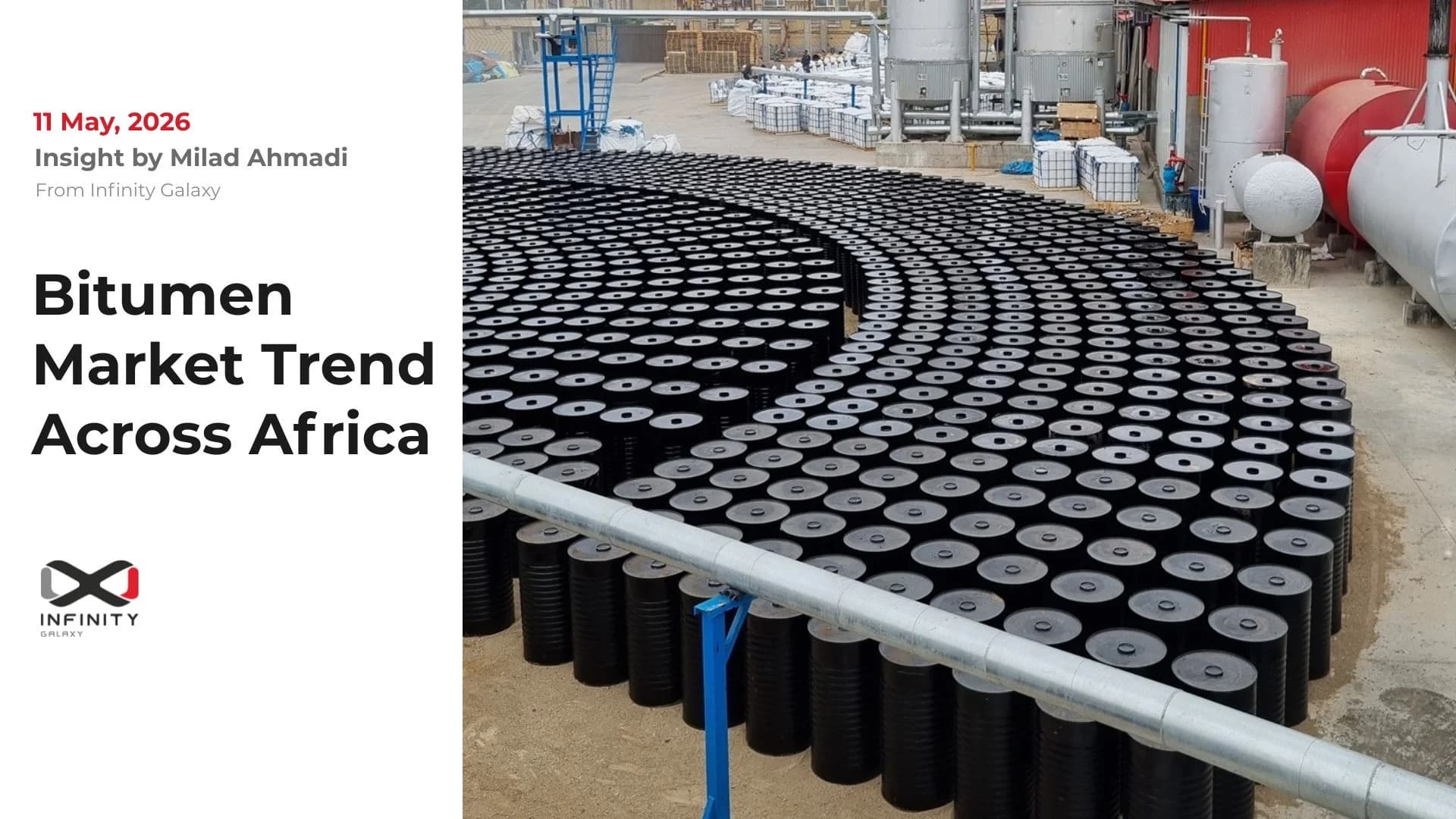
Based on the latest market reports, the African bitumen market has entered a phase where looking at price numbers alone is no longer enough.
In some trade routes, prices have corrected lower, but freight risk, supply limitations, and delivery timing are still keeping purchasing decisions highly sensitive.
According to reports from international industry publications, commercial traffic through the Strait of Hormuz route remains heavily disrupted. As a result, lower prices have not yet been fully reflected in real delivered prices across East Africa.
Kenya Bitumen Market
In Kenya, CFR drum prices moved lower compared to last week, but this correction is still seen more on paper than in actual market access.
The main challenge remains availability, freight, and timing, as cargo movement from the Persian Gulf to East Africa is still facing restrictions and operational risk.
Market View:
For Kenyan buyers, this is a good time to re-evaluate pricing and freight conditions. However, this correction should not be interpreted as a full market normalization.
The right decision now is to evaluate price, real availability, and delivery timing together.
Tanzania Bitumen Market
Tanzania, similar to Kenya, also recorded lower CFR drum numbers this week. However, container freight rates to Dar es Salaam remain unchanged, and the supply route has not fully normalized.
For this reason, the market may appear calmer from the outside, but real buyers are still facing the same key question:
Is the cargo actually available and shippable?
Market View:
In Tanzania, buyers with active projects should not focus only on waiting for lower prices.
The buying window should be based on cargo access and delivery capability, not only on lower numbers in reports.
Uganda Bitumen Market
In Uganda, strong demand is still being reported, and the market continues to depend heavily on regional supply flows through Kenya.
This means even if some origin prices move lower, the more important issue for Ugandan buyers is proper management of inland logistics, stock availability, and delivery timing.
Market View:
Uganda is not a market that moves based only on one price number.
For serious buyers, a reliable supplier and stable supply route may create more value than saving a few dollars on price.
DRC Bitumen Market
The DRC market remains active from the demand side, but logistics continues to be the main challenge.
Both local and international reports indicate that demand in Congo DRC is still present, while transportation and cargo transit issues through major entry points remain unresolved.
Market View:
For DRC buyers, the key question is not whether the global market moved slightly higher or lower today. The real question is: who can deliver the cargo through a workable route with reliable timing?
Nigeria Bitumen Market
Unlike East Africa, Nigeria recorded higher CFR import prices this week.
Imported cargo prices into Lagos increased by around USD 20, but the domestic market is showing a mixed picture: demand is still present, while inventories also remain relatively high, leading some local sellers to offer discounts.
Market View:
Nigeria remains one of Africa’s most active and important bitumen markets, but buyers are making decisions more carefully. If you have real purchasing requirements, it may be better to review supply options before another change in freight costs or HSFO levels.
South Africa Bitumen Market
In South Africa, domestic prices remained mostly stable, but the market is entering a sensitive seasonal phase.
Paving activity is still ongoing, however, as winter approaches, parts of the road sealing, rubber, and emulsion sectors usually slow down between May and August.
Market View:
South Africa may look stable on the surface, but stability does not mean absence of risk. Buyers should manage inventory and procurement planning more carefully before seasonal project activity slows further.
Final Insight
The African bitumen market has not entered a simple “cheap market” phase.
It has entered a phase of rebalancing under supply risk.
In East Africa, prices appear lower, but delivery remains difficult.
In Nigeria, import prices moved higher while the domestic market faces inventory pressure.
In South Africa, prices remain stable, but the seasonal working cycle is changing.
Each market now requires a separate purchasing strategy.
If you are working on Kenya, Tanzania, Uganda, DRC, Nigeria, or South Africa, I can review the exact market position and possible buying window for your target country separately.

Comments
Share your thoughts...
More Reports
Curious to see more, discover more articles, and stay up-to-date?