Africa Bitumen Market
Africa Bitumen Market: Timing Matters More Than Price
The African bitumen market this week is not only about prices going up or down. It is more complex. In East Africa, prices have gone up again. In West Africa, some prices have gone a little down, but this is mainly because of rain, slower projects, and careful buyers. It is not a normal market...

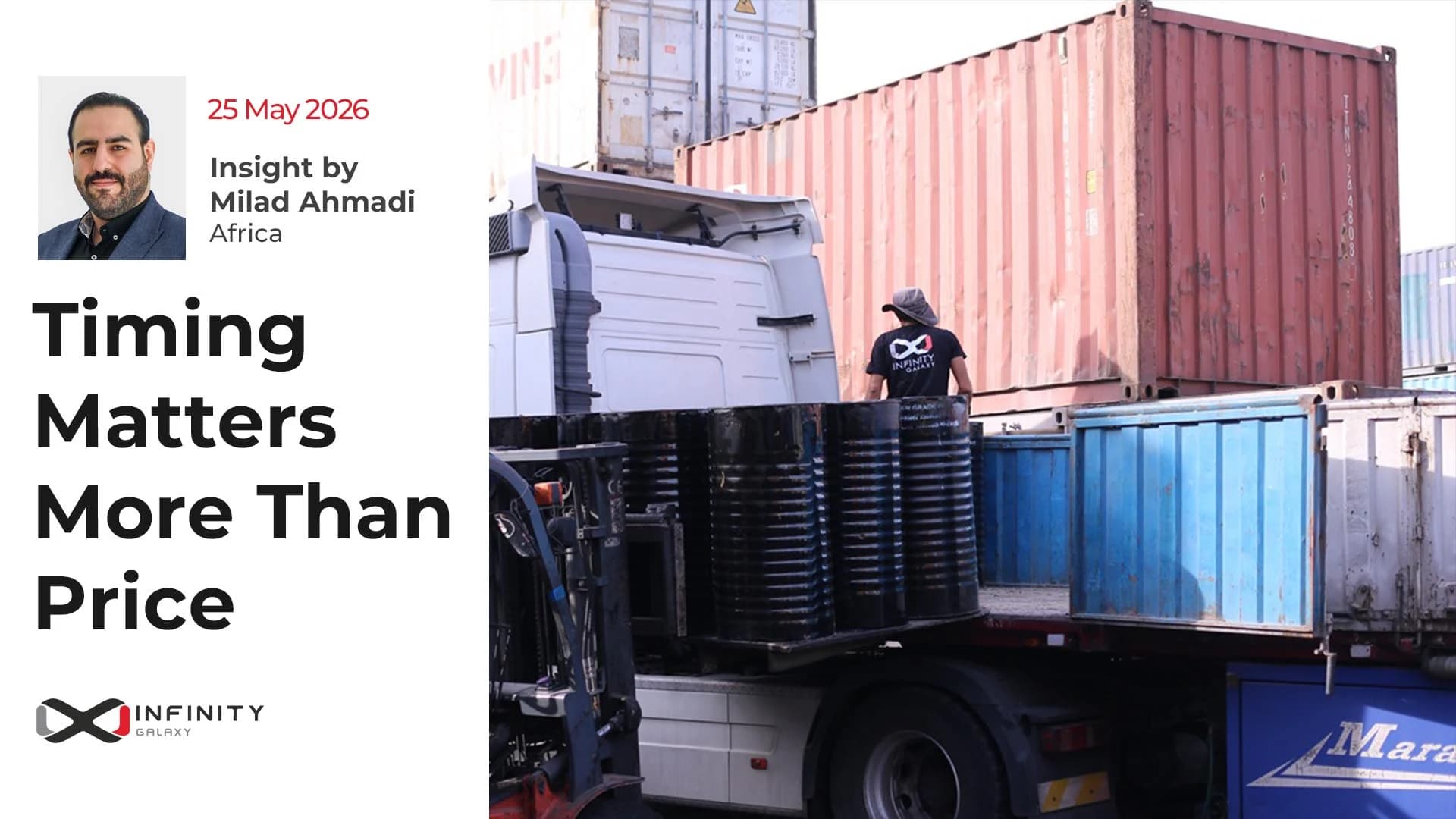
The African bitumen market this week is not only about prices going up or down. It is more complex. In East Africa, prices have gone up again. In West Africa, some prices have gone a little down, but this is mainly because of rain, slower projects, and careful buyers. It is not a normal market situation.
This uneven market is still strongly connected to supply conditions.
As of 26 May, talks about the Persian Gulf and the Strait of Hormuz are still ongoing, and shipping from this region is not fully normal yet. Because of this, the market is not reacting to real changes, but to possible future changes.
Any change in the next weeks could quickly increase available supply and create a short buying period for African importers. For this reason, the timing of buying may be more important than the price itself.
Kenya & Tanzania: East Africa Still Under Supply Pressure
In Kenya and Tanzania, CFR drum prices increased by about USD 18 compared to last week, reaching USD 769–779.
At the same time, freight costs from Bandar Abbas / Jebel Ali to Mombasa and Dar es Salaam are still high, around USD 250–260.
The main point is that East African importers are still trying to find other sources instead of depending on the Persian Gulf, because cargo flow from this region is still affected by Iran–US tensions and shipping limits.
Market View:
For Kenya and Tanzania, the market is not only about price. The main question is which supplier can give real cargo, on-time delivery, and acceptable freight.
Buyers with active projects should think about their buying time earlier.
Nigeria: Prices Slightly Lower, But Market Is Not Cheap
In Nigeria, CFR Lagos prices went down by only about USD 2 compared to last week, reaching USD 825–835.
This small drop is not a strong market weakness. Argus shows that heavy rain in southern Nigeria has slowed down projects and demand.
At the same time, some cargoes are still going to Nigeria and West Africa, which creates concerns about storage levels.
Market View:
Nigeria is still a very active market, but buyers are more careful now. In this situation, success is not only about price. It is also about timing, real availability, payment terms, and delivery speed.
Ghana & Ivory Coast: Small Drop, Mainly Seasonal
In Ghana, CFR Takoradi–Tema prices went down about USD 3. In Ivory Coast, FOB Abidjan prices went down about USD 4.
But this is mainly because of seasonal weather and rain in West Africa.
Argus reports that rain in countries like Nigeria, Ivory Coast, Ghana, and Cameroon has reduced activity and demand. The rainy season also started earlier in some areas.
Market View:
In Ghana and Ivory Coast, this is not a real price fall. It is more a temporary seasonal pause. If projects start again after the rainy season, suppliers who already have stock will have a stronger position.
South Africa: Stable Prices, Demand Affected by Weather
In South Africa, local prices stayed stable at ZAR 14,700–15,200. But rain in many areas has reduced activity and bitumen use.
After earlier increases, the market is now holding prices, not falling.
Market View:
South Africa looks stable, but it is not risk-free. Because of seasonal changes and lower project activity, buyers should manage stock and timing more carefully.
Africa Market Insight by Milad Ahmadi
The African market is now in two parts:
East Africa is under supply and freight pressure. West Africa is affected by rain, higher stock levels, and careful buying.
This means each country needs a separate decision. One general view for all Africa is not enough anymore.
In this situation, buyers who wait only for lower prices may miss the right time.
A better way is to look at three things together: price, real availability, and delivery ability.
If you plan to buy in Kenya, Tanzania, Nigeria, Ghana, Ivory Coast, South Africa, or other African markets in the next 30 days, send us your target country, product type, and timing. We will help you understand supply conditions, logistics risk, and the best buying window.

Comments
Share your thoughts...
More Reports
Curious to see more, discover more articles, and stay up-to-date?