

Written by

Milad Ahmadi
Explore all weekly reports written by Milad Ahmadi.
All published reports (17)

Africa Bitumen Market
Africa Bitumen Market : Buyers Face Higher Costs and Uncertain Delivery Routes
Prices Are Rising, but Supply Routes Have Yet to Normalize Ongoing tensions between Iran and the United States in the Middle East, restrictions on transit through the Strait of Hormuz, and rising crude oil and marine fuel costs continue to affect bitumen prices and the execution of supply transactions. At the same time, demand is...
Milad Ahmadi
Oct 26, 2026
Africa Bitumen Market
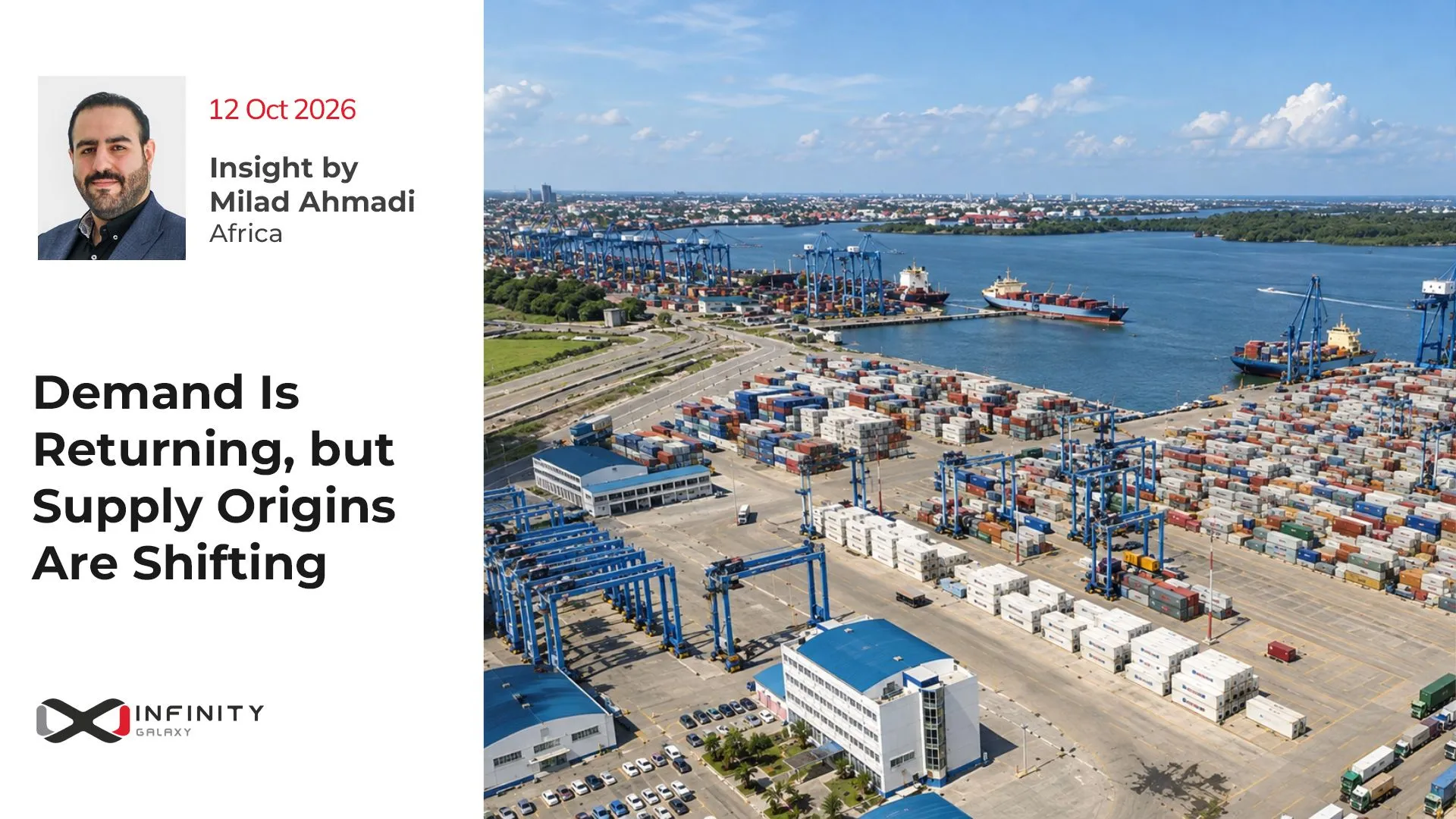
Africa Bitumen Market : Demand Is Returning, but Supply Origins Are Shifting
As many African markets approach the more active road paving season, demand is gradually picking up. However, in East and Southern Africa, continued restrictions affecting Iranian supply and shipments from the Mideast Gulf are prompting buyers and importers to look more closely at European and Mediterranean cargoes.The result is straightforward: supply remains available, but along...
Milad Ahmadi
Oct 12, 2026
Africa Bitumen Market
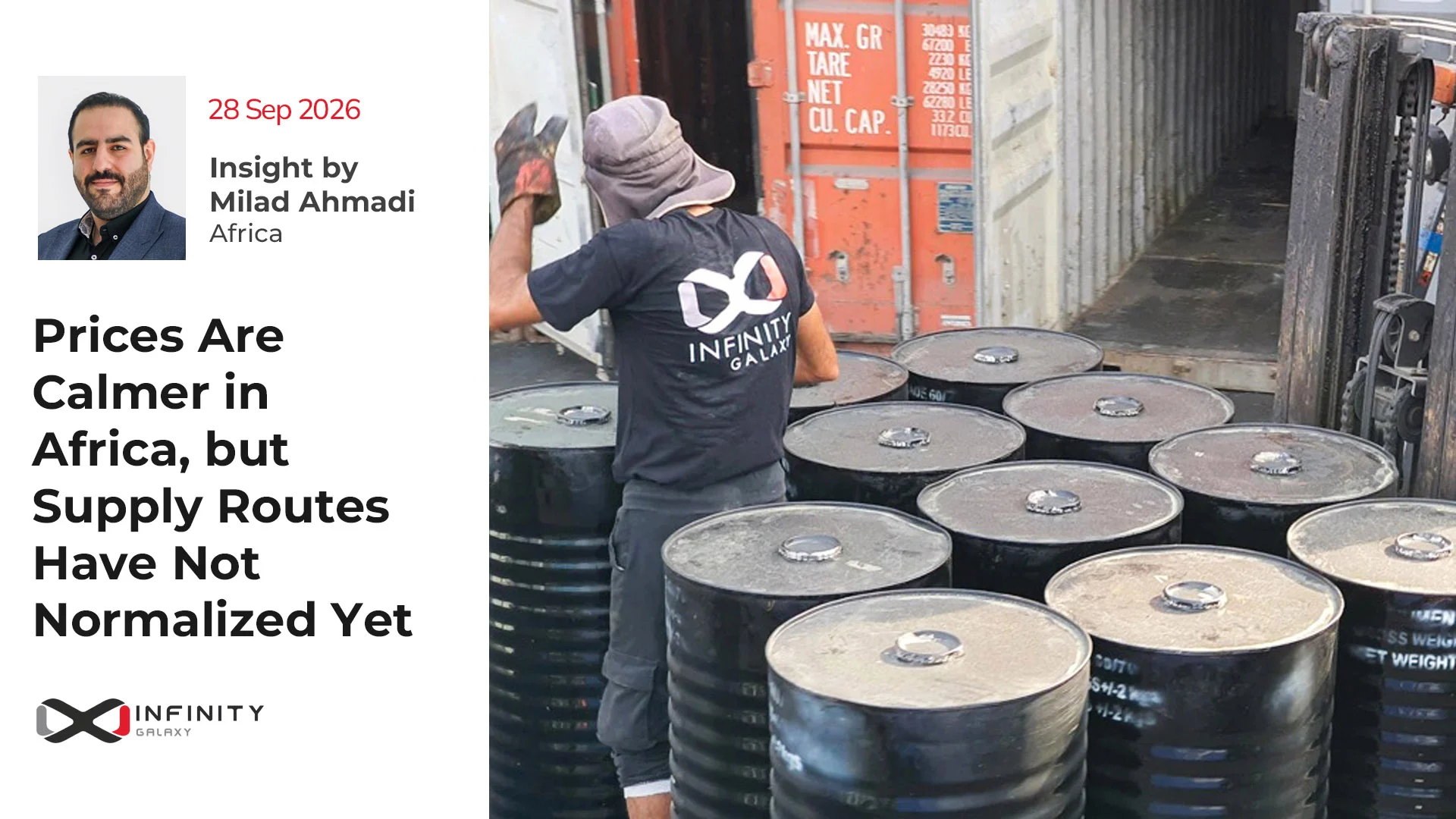
Africa Bitumen Market: Prices Are Calmer, but Supply Routes Have Not Normalized Yet
The African bitumen market has become calmer compared with the sharp volatility seen earlier in September, but shipping constraints from the Middle East Gulf continue to influence purchasing decisions across Africa. Market discussions increasingly show buyers distinguishing between a low price on paper and a cargo that can actually be executed and delivered. This is...
Milad Ahmadi
Sep 28, 2026
Africa Bitumen Market
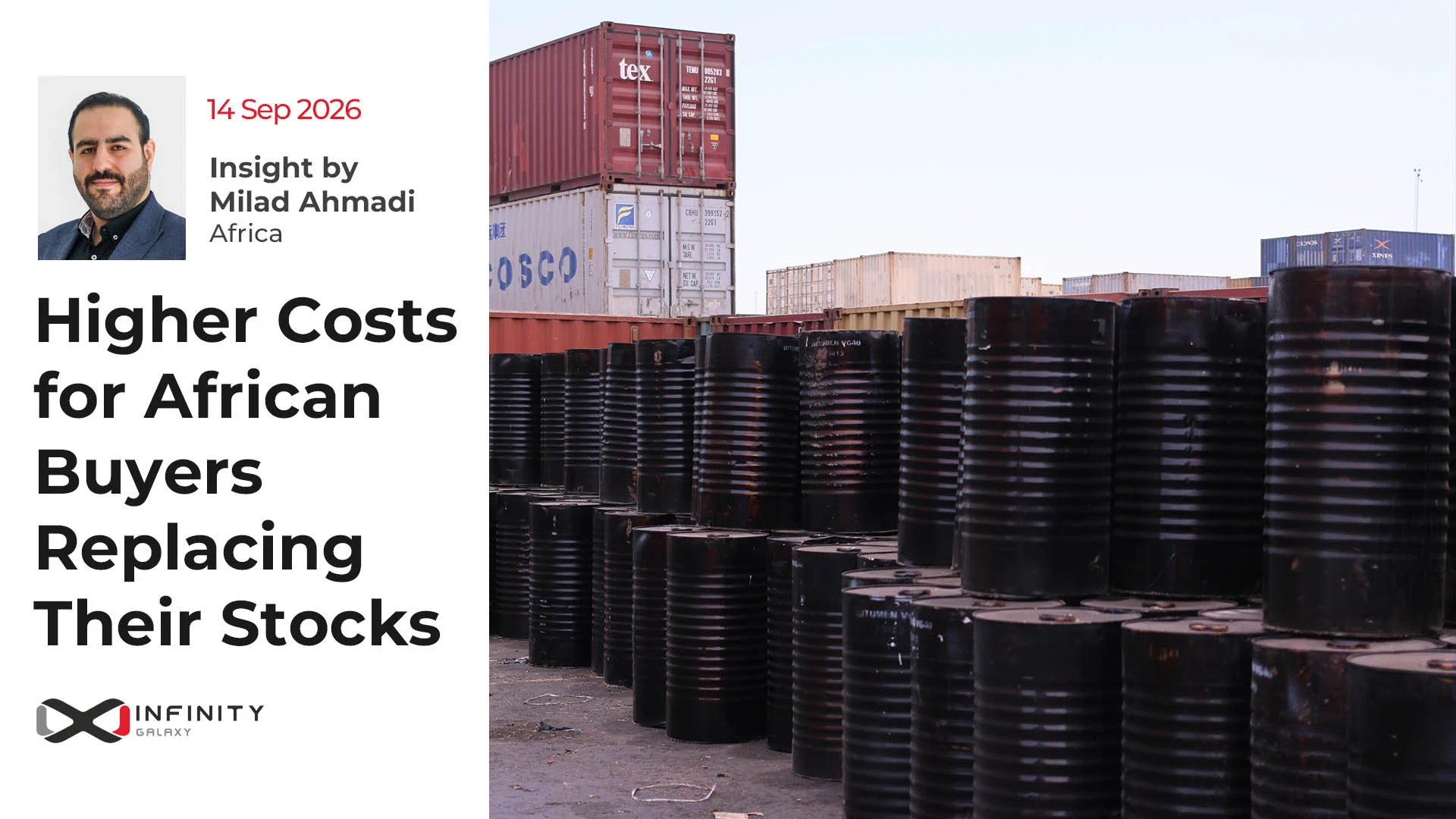
Africa Bitumen Market: Higher Costs for Buyers Replacing Their Stocks
Tensions in the Middle East have pushed crude oil and HSFO prices higher. This means African buyers and traders now need to pay more to buy new cargoes and replace their current stocks. However, the impact is not uniform across the region. In West Africa, rainfall continues to weigh on demand. In East Africa, the...
Milad Ahmadi
Sep 14, 2026
Africa Bitumen Market
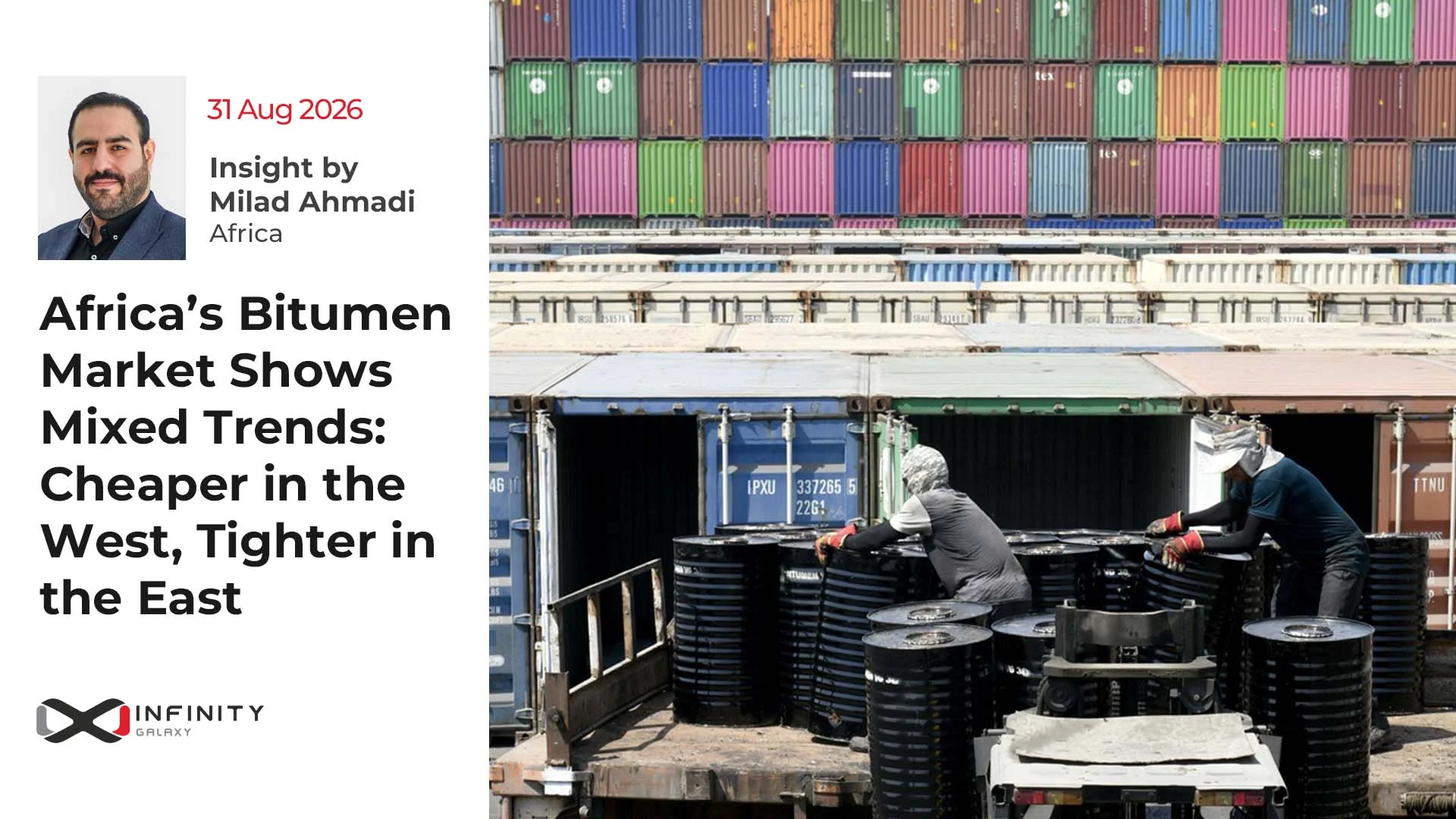
Africa’s Bitumen Market Shows Mixed Trends: Cheaper in the West, Tighter in the East
The deadlock between Iran and the United States over the Strait of Hormuz continues to keep direct sourcing from the Persian Gulf under pressure, with shipping, payment and scheduling constraints still affecting trade. At the same time, a significant decline in crude and Mediterranean HSFO over the past week has lowered replacement costs in West...
Milad Ahmadi
Aug 31, 2026
Africa Bitumen Market
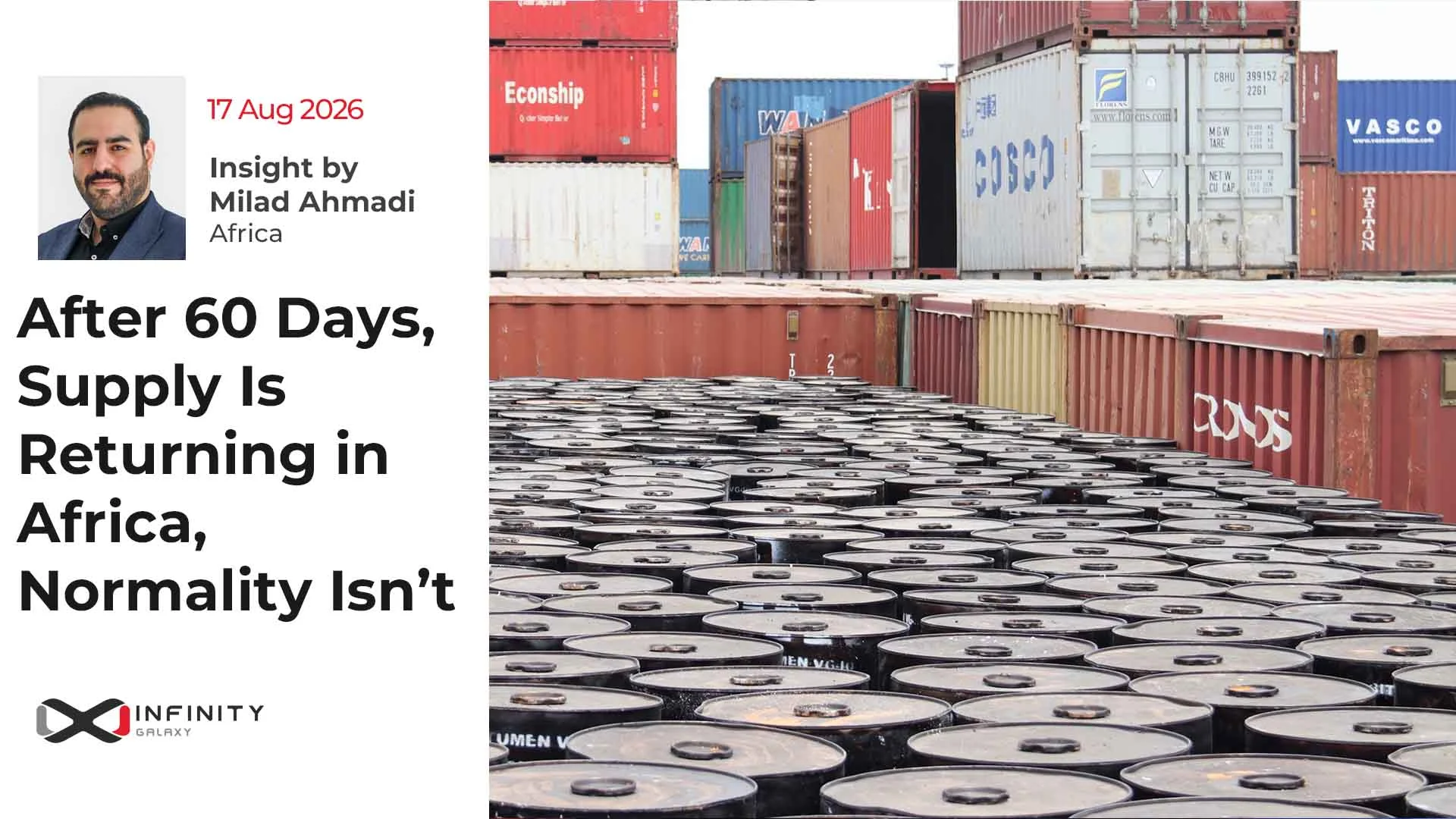
Africa Bitumen Market Update: After 60 Days, Supply Is Returning. Normality Isn’t
After 60 days, bitumen supply is returning to parts of Africa, but market conditions remain far from normal. Higher replacement costs, freight and execution risks continue to shape buying decisions, while West, East and Southern Africa move in different directions.
Milad Ahmadi
Aug 17, 2026
Africa Bitumen Market
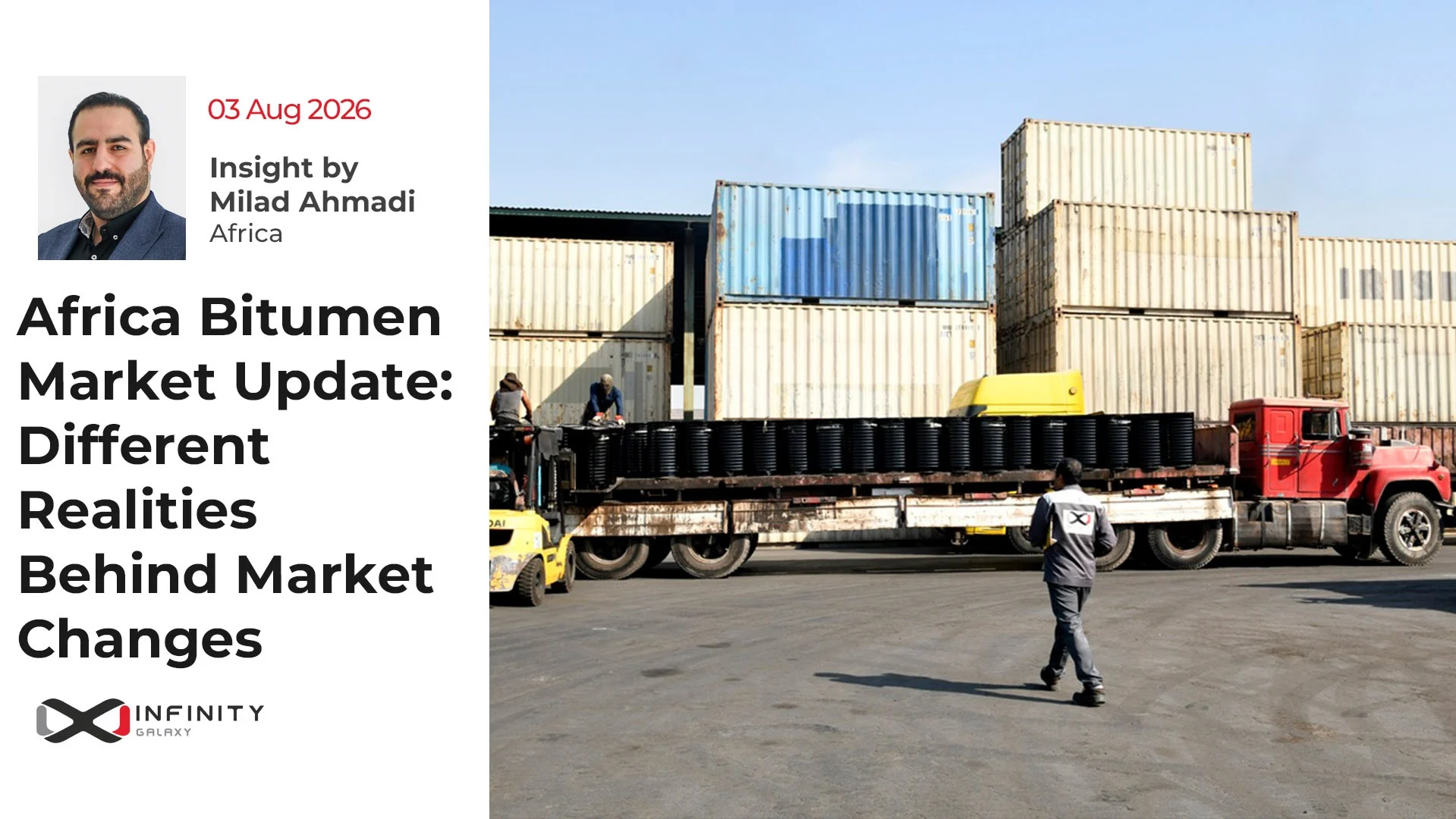
Africa Bitumen Market Update: Different Realities Behind Market Changes
Africa’s bitumen market is showing different realities across regions. While some markets see lower replacement costs, freight, cargo availability, and delivery risks continue to shape buying decisions. This update explores why price alone is no longer enough to evaluate the best opportunity.
Milad Ahmadi
Aug 3, 2026
Africa Bitumen Market
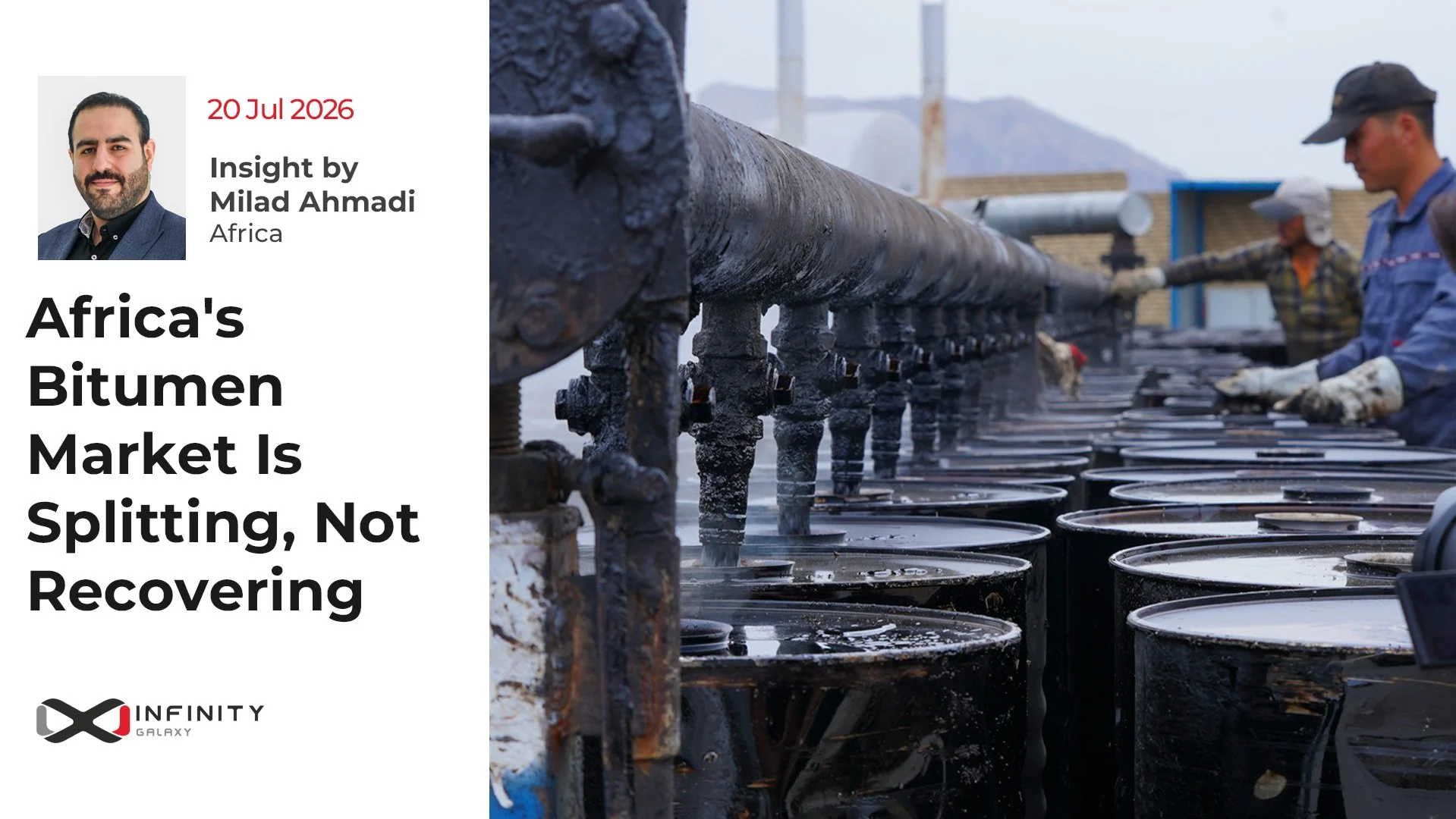
Africa's Bitumen Market Is Splitting, Not Recovering
Africa's bitumen market is moving in different directions. West Africa faces higher replacement costs despite weak demand, while East Africa sees lower prices but tighter supply and shipping constraints. **At Infinity Galaxy, we believe procurement today depends less on headline prices and more on cargo availability, logistics, and delivery certainty.
Milad Ahmadi
Jul 20, 2026

Africa Bitumen Market
Lower Prices Same Buying Challenges
Africa's bitumen market is entering a new phase of price correction, but lower prices do not eliminate buying risks. This weekly report analyzes price trends across Nigeria, Ghana, Kenya, Tanzania, South Africa, and other key markets, highlighting how logistics, freight, and supply conditions continue to shape purchasing decisions.
Milad Ahmadi
Jul 6, 2026
Africa Bitumen Market
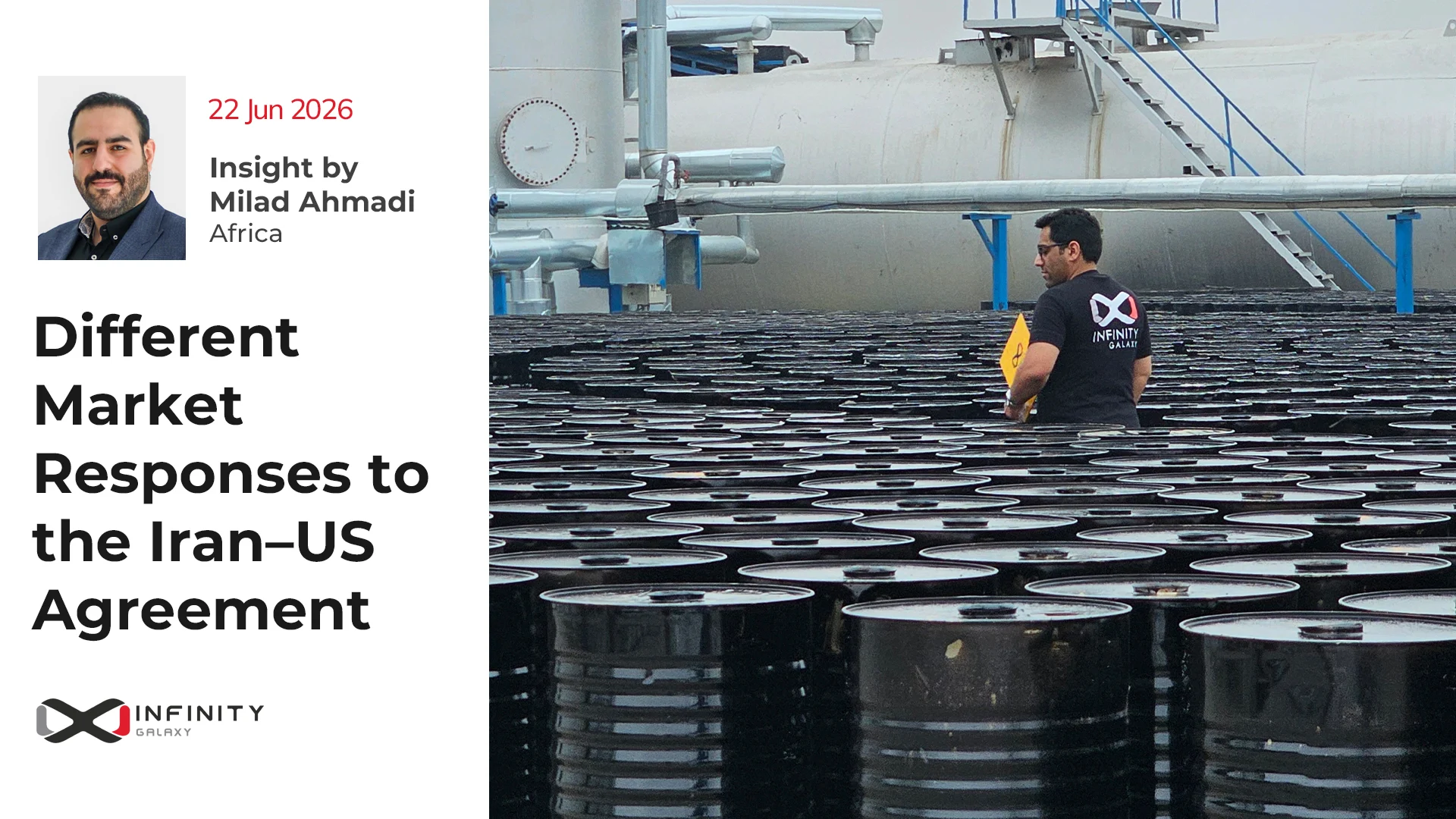
Africa Bitumen Market: Different Market Responses to the Iran–US Agreement
The African bitumen market has entered a new phase this week. Following the temporary agreement between Iran and the United States and expectations of a gradual reopening of trade flows through the Mideast Gulf, crude oil and HSFO prices experienced a significant correction. This has pushed cargo values lower across parts of West and Southern...
Milad Ahmadi
Jun 22, 2026
Join our newsletter
Enter your email for weekly bitumen price updates & trends.