Bitumen
Oxidized Bitumen Uses: Main Applications by Industry
Oxidized bitumen is used in roofing, waterproofing, pipe coating, and other industrial products. Learn how it works in each application and what buyers should consider when choosing the right grade.

- Oxidized Bitumen in Roofing
- Oxidized Bitumen and Other Roofing Membranes
- Waterproofing and Damp-Proofing
- Oxidized Bitumen Pipe Coating
- Industrial Flooring and Mastics
- Canal Lining and Hydraulic Works
- Roads and Joint Sealing
- Electrical Industry
- Adhesives, Paints, Sealants and Other Uses
- Which Oxidized Bitumen Grade Fits Which Use?
- What Buyers Should Check Before Choosing
- Conclusion
- Frequently Asked Questions
Oxidized bitumen is used in products that need to stay firm in warm conditions and keep water out. Common uses include roofing, waterproofing, steel pipe coatings and industrial products such as mastics and sealants.
Compared with regular paving bitumen, oxidized bitumen softens at a higher temperature. This helps it keep its shape when used in warm conditions.
Manufacturers make oxidized bitumen by blowing air through hot bitumen. This process is called air blowing, and the product is also known as blown bitumen or air-blown bitumen. The word “oxidized” refers to this planned change during production. It does not mean that the bitumen has been damaged by sunlight or age.
This guide explains where oxidized bitumen is used and what buyers should check before choosing a grade.
Oxidized Bitumen in Roofing
Roofing factories use oxidized bitumen to make waterproof sheets. During production, hot bitumen is applied to a base sheet, such as fiberglass fabric or roofing felt. The bitumen blocks water, while the base sheet helps the finished product keep its shape.
These sheets are used in products such as roll roofing membranes and asphalt shingles. Oxidized bitumen is also used in some roof coatings and roof cement, which help protect or repair existing roofs.
Roofing Products That May Use Oxidized Bitumen
Oxidized bitumen is used in several roofing products. The table below shows some common products and their main uses.
| Product | Main use |
|---|---|
| Roll roofing membranes | Waterproof sheets used to cover roof surfaces. |
| Asphalt shingles | Roofing pieces made with a base sheet and bitumen. |
| Roof coatings | Products applied directly to existing roof surfaces to help protect them from water. |
| Roof Cement | A thick product used to seal small gaps and repair roof areas. |
Factory Production vs. On-Site Application
Factories and contractors use roofing asphalt in different ways.
| Factory production | On-site application |
|---|---|
| Bitumen is used as a raw material to make roofing sheets. | Hot roofing asphalt is spread between roof layers. |
| Used in membrane and shingle production. | This method is called hot mopping. |
| Grade depends on the production formula. | Product must meet the roof system requirements. |
The two jobs may need different products. Before choosing a grade, check the roofing product, the production or application method, and the required specifications.
ASTM D312/D312M sets requirements for four types of asphalt used in roofing. It covers properties such as softening point, penetration and flash point. However, not every oxidized bitumen grade automatically meets this standard. If your project requires ASTM D312/D312M, ask the supplier to confirm the required type and test results.
Oxidized Bitumen and Other Roofing Membranes
Not all bitumen roofing membranes use oxidized bitumen. Some are made with polymer-modified bitumen, which contains materials such as APP or SBS. These materials change how the bitumen performs.
APP helps the membrane resist high temperatures, while SBS makes it more flexible, especially in cold weather. These are different types of roofing materials, not grades of oxidized bitumen.
This difference matters when choosing a raw material for membrane production. Manufacturers should check the membrane formula and production requirements before selecting a bitumen grade.
Waterproofing and Damp-Proofing
Oxidized bitumen is also used in products that protect buildings from water and moisture. These products include coatings, waterproof sheets and materials used to join different layers.
Damp-proofing and waterproofing are related, but they do not always have the same job.
| Damp-proofing | Waterproofing |
|---|---|
| Helps stop moisture from moving through walls and foundations. | Provides stronger protection where water may collect or press against a surface. |
| Often used against moisture in the ground. | Used in places such as basements, roofs and areas exposed to water. |
For roofs and open decks, the waterproof layer must also handle sunlight and changes in temperature. Below ground, sunlight is not usually the main concern. Instead, the system must handle water pressure, soil contact and movement around joints.
The right product depends on where it will be installed and how much water it must resist. A coating for a foundation wall may not be suitable for a basement exposed to water pressure.
ASTM D449/D449M covers asphalt used for damp-proofing and waterproofing. If a project names this standard, check the required specification and test results before ordering.
Oxidized Bitumen Pipe Coating
Steel pipes used for oil, gas and water pipelines need protection against rust. One way to protect the outside of these pipes is to apply a hot bitumen-based coating.
A product used for this purpose is called bitumen enamel. Despite the word “enamel,” it is not ordinary paint. It is a thick coating made mainly from oxidized or modified bitumen and fine mineral materials. The factory heats it until it becomes soft enough to apply to the pipe.
Before applying the coating, the factory cleans the steel and may add a thin first layer called a primer. The primer helps the main coating stick to the metal. Some coating systems also use a layer of glass fabric or another support material to protect the coating.
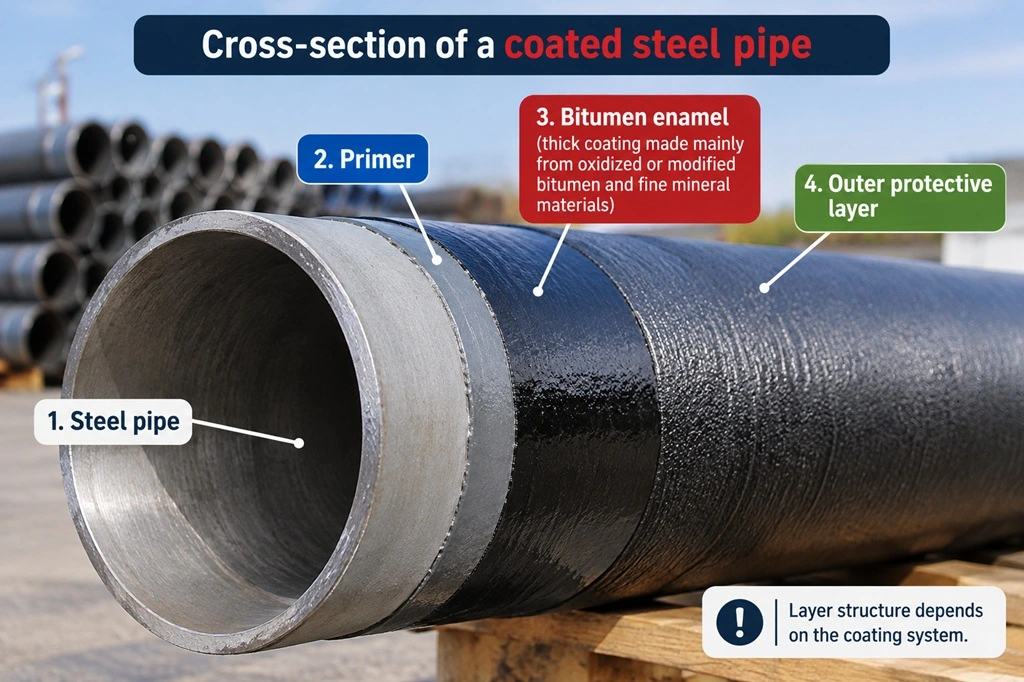
EN 10300 covers factory-applied hot bitumen coatings for steel pipes and fittings. For systems using oxidized bitumen enamel, it gives a pipeline design-temperature range of −15°C to +75°C. This range applies to the coating system covered by the standard. It is not a general service-temperature guarantee for every oxidized bitumen grade.
For buyers, the full coating specification is important. Check the required coating type, primer, support layer and inspection rules before choosing the raw bitumen.
Industrial Flooring and Mastics
Oxidized bitumen can be used in some industrial floor products, including mastic asphalt.
Mastic is a thick mixture made from a binder and other materials, often including mineral fillers. The binder holds the mixture together, while the fillers help give it the required body and strength.
Some factories use special mastic asphalt floors to protect the surface below from spills and chemical contact. However, the floor’s resistance does not depend on bitumen alone. It depends on the full mixture and the chemicals it may come into contact with.
If you manufacture mastic, check that the bitumen works with your formula and production process. If you are buying a finished floor for a plant, ask the manufacturer to confirm that it can resist the actual liquids used at your site.
Canal Lining and Hydraulic Works
Bitumen-based sheets and coatings may be used in some water projects to reduce water loss through the ground. These systems can be considered for canals and water-storage areas.
The right system depends on the site, water pressure and ground conditions. A project should use a membrane or coating that has been tested and approved for its intended use.
Roads and Joint Sealing
Oxidized bitumen is not the main binder used to make road asphalt. Road asphalt usually uses paving grades such as penetration grade 60/70 or viscosity grades such as VG 30. These grades are selected for the road mix and traffic conditions.
Crack filling and joint sealing are separate road maintenance applications. They usually use materials such as asphalt emulsions or polymer-modified hot-applied sealants, rather than standard oxidized bitumen. The right material depends on the type of crack and the repair method.
For more information about paving materials, see our guide to bitumen used in road construction.
Electrical Industry
Some cable systems use bitumen-based compounds to fill and seal cable joints, cable ends and connection boxes. These compounds fill empty spaces, help keep water out and can provide electrical insulation.
The compound is a finished mixture, not just raw bitumen. Its electrical performance depends on the full formula and the cable system in which it is used.
If you buy a cable-filling compound, check that it is approved for the cable accessory. If you manufacture it, test the finished mixture before changing the bitumen or other ingredients. The properties of the raw binder alone do not show whether the final compound meets the required electrical rating.
Adhesives, Paints, Sealants and Other Uses
Oxidized bitumen is also used as an ingredient in some industrial products. Manufacturers mix it with other materials to make products with different uses.
| Product | How bitumen is used |
|---|---|
| Adhesives and mastics | Helps hold materials together or fill gaps in some products. |
| Hot-melt products and sealants | May be part of mixtures that are heated before use and become firm as they cool. |
| Bituminous paints and coatings | Acts as a binder in protective coatings for metal and other surfaces. |
| Sound and moisture protection | Used in some sheets and pads to reduce vibration or keep moisture out. |
| Rubber products | May be one ingredient in some rubber mixtures. |
These are uses of finished products or mixtures. They do not mean that every oxidized bitumen grade is suitable for all these applications. Manufacturers should check the raw material against their product formula and test requirements.
Which Oxidized Bitumen Grade Fits Which Use?
The grade number gives buyers a first idea of the bitumen’s properties. In a grade such as 95/25, the first number refers to the softening point. The second refers to penetration, a test that measures how far a standard needle enters the bitumen under set conditions.
These values help compare grades, but they do not show how a finished product will perform on their own. The final choice also depends on the product formula, the climate and the application method.
Grade Selection Table
| Grade | Uses to check |
|---|---|
| Oxidized Bitumen 75/25 | Check the product data for suitable mastic or roofing applications. |
| Oxidized Bitumen 85/25 | Some roofing, waterproofing and sealant products. |
| Oxidized Bitumen 90/15 | Some roofing, waterproofing, pipe coating and paint formulas. |
| Oxidized Bitumen 95/25 | Some roofing layers, waterproofing products, hot-melt products and industrial sealants. |
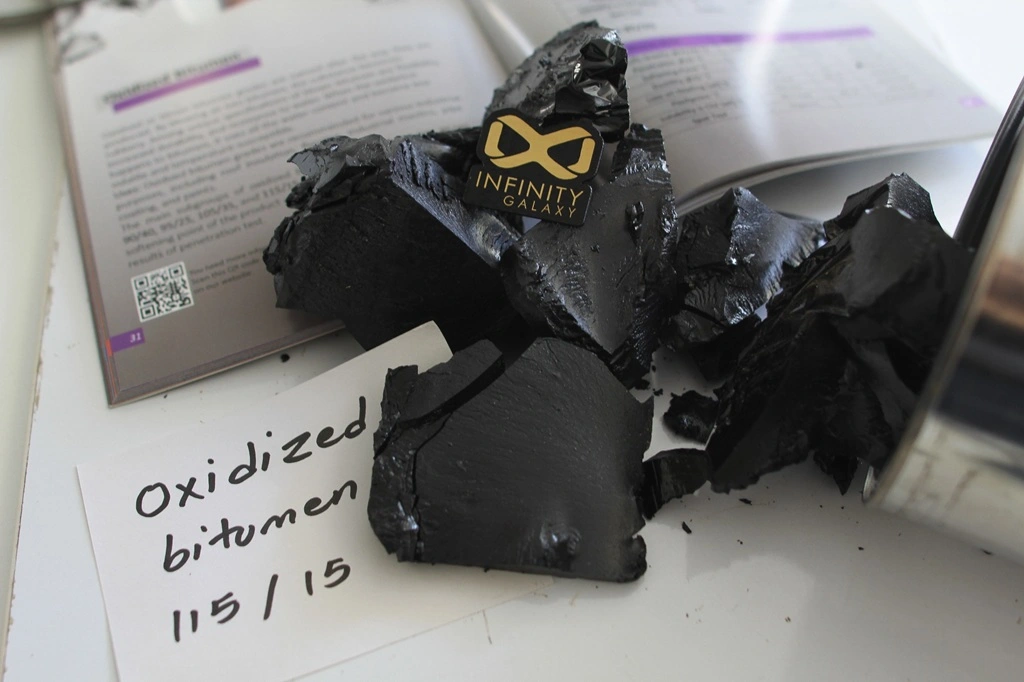
| Oxidized Bitumen 115/15 | Some roofing felt, shingle and pipe-coating products. |
Use this table as a starting point, not as final approval for a project. Check the technical data and application requirements before selecting a grade.
Infinity Galaxy supplies all grades of oxidized bitumen. See our oxidized bitumen category page for available specifications.
What Buyers Should Check Before Choosing
Start with the finished product and how it will be used. Tell the supplier whether you are making roofing sheets, a pipe coating, a mastic or a sealant. Share the project specification and the temperature range the product will face. This information helps narrow down the suitable grades.
Buyer Checklist
- Finished product and application
- Required grade and specification
- Temperature and working conditions
- Packing and heating method
Next, check the documents required for your order.
| Document | What it tells you |
|---|---|
| Technical Data Sheet (TDS) | Lists the product’s main properties. |
| Certificate of Analysis (CoA) | Shows test results for a specific batch. |
| Safety Data Sheet (SDS) | Gives safety and handling information. |
| Inspection documents | Confirm checks required by the buyer or project. |
Packing is another point to consider. Oxidized bitumen may be supplied in bulk, drums, cartons or bags, depending on the grade and order. Choose a pack that works with your storage space, lifting equipment and heating system.
See our oxidized bitumen packing options and confirm which options are available for your shipment.
Oxidized bitumen is usually heated before use. Follow the supplier’s instructions and the safety data sheet for the grade. Hot bitumen can cause serious burns, so workers must use suitable equipment and protective clothing.
If you have a project specification, the Infinity Galaxy team can help you compare it with the available grade data. See our oxidized bitumen price page for the latest price and other information you need to buy oxidized bitumen.
Conclusion
Oxidized bitumen is used in roofing, waterproofing, pipe coatings and several industrial products. The right grade depends on the finished product, the application method and the conditions it will face.
Share your project specification with Infinity Galaxy to compare the available grades and technical data.
For a full description of the product and its properties, see our guide to oxidized bitumen. You can also read about how oxidized bitumen is made.
Frequently Asked Questions
What is oxidized bitumen used for?
Oxidized bitumen is used in roofing, waterproofing, steel pipe coatings, industrial flooring, mastics and some adhesives and sealants. It is often selected for products that need to stay firm at higher temperatures and help keep water out.
Is oxidized bitumen used for road construction?
It is not the main binder used in road asphalt. Road projects normally use paving grades such as 60/70 or VG grades. Oxidized bitumen may be used in some products for sealing cracks and joints. See our guide to bitumen used in road construction.
Which oxidized bitumen grade is used for roofing?
The right grade depends on the roofing product, the climate and the application method. Grades such as 85/25, 95/25 and 115/15 may be used in different roofing products. Check the roof system specification and the product data before choosing.
Is oxidised bitumen the same as blown bitumen?
Yes. Oxidised is the British English spelling of oxidized. Blown bitumen and air-blown bitumen are also common names for the product. The term blown asphalt is also used in some markets.
What is the difference between bitumen and coal tar?
Bitumen mainly comes from crude oil refining or natural deposits such as gilsonite. Coal tar is made by heating coal without air. They are different materials, so buyers should check which one the project specification requires.
Comments
Share your thoughts...
Share this article
Latest
From the blog
Curious to see more, discover more articles, and stay up-to-date?