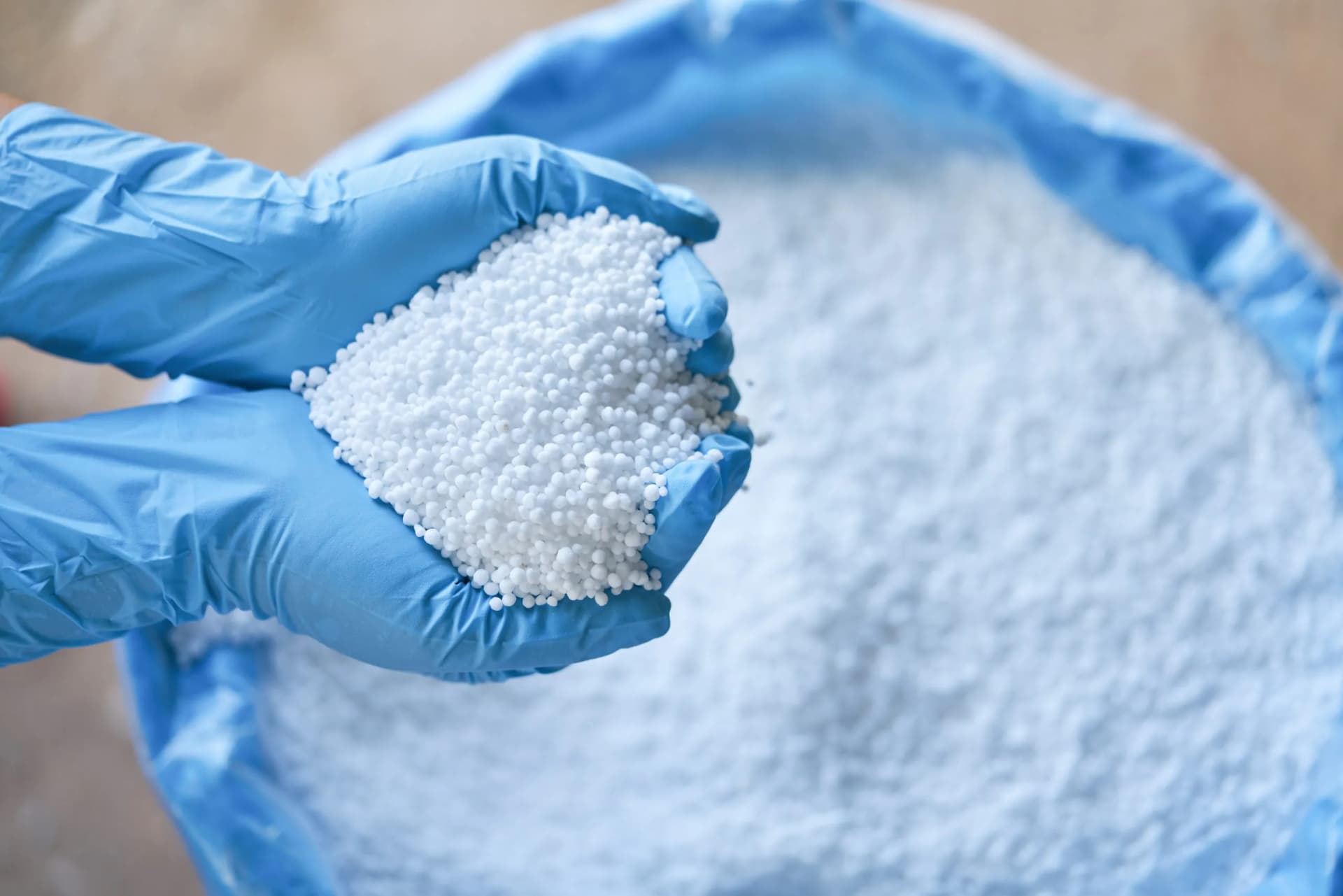
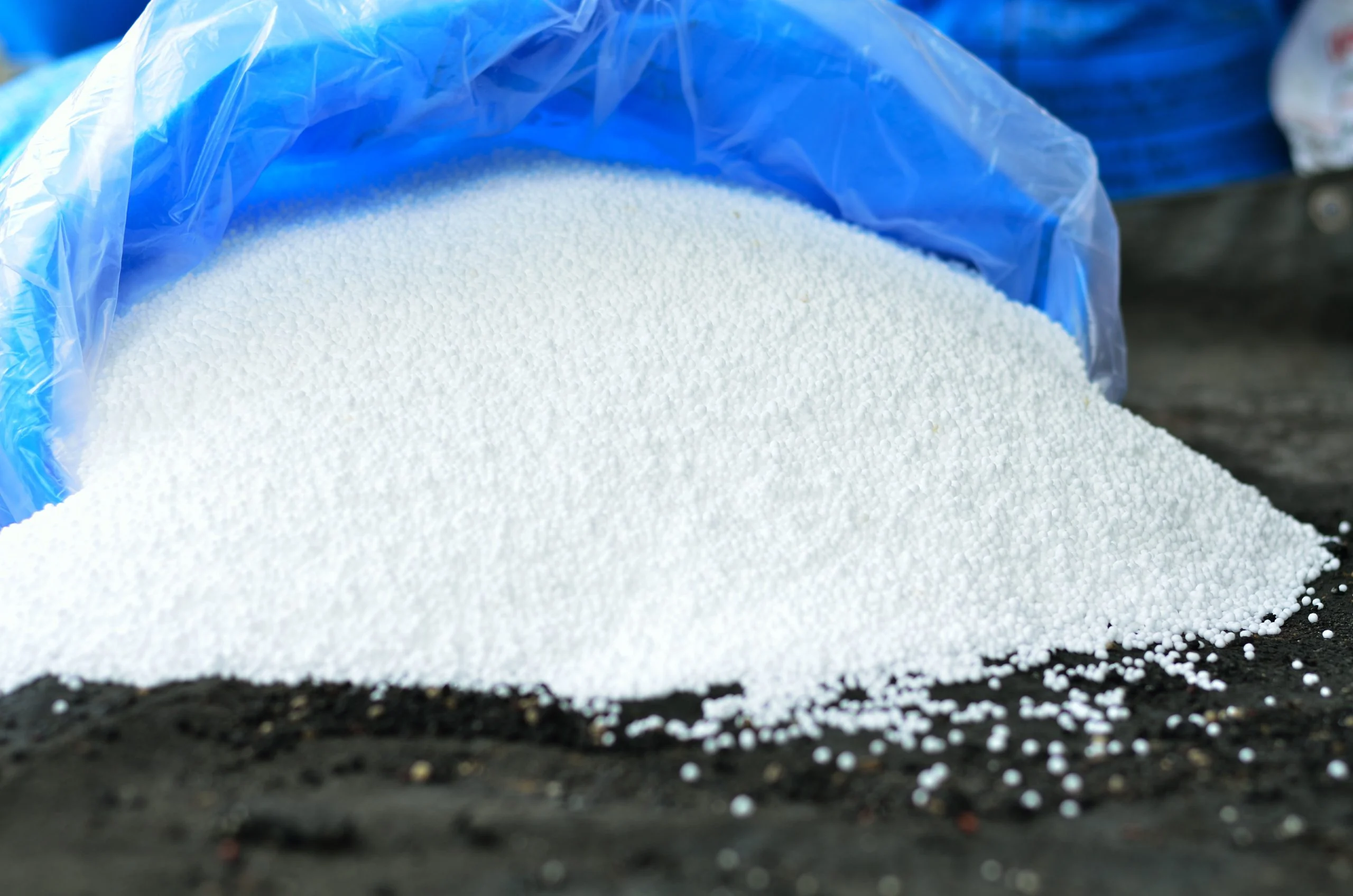
Urea, also known as Nitrogen 46%, is a white, odorless nitrogen fertilizer made from ammonia and CO2. Here's its formula, pH, production process, and uses.
Urea, also called Nitrogen 46%, is a white, odorless, crystalline solid fertilizer made mainly from natural gas and petroleum feedstocks.
It's highly soluble in water and contains more nitrogen by weight than almost any other solid fertilizer. Its density is about 1.32 g/cm³ at room temperature.
If you are interested in knowing more about urea, read this article.
Urea Meaning, Formula, and Nitrogen Content
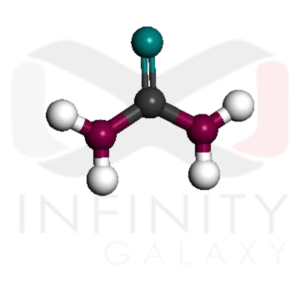
Urea's chemical formula is CO(NH₂)₂. The compound has a molecular weight of 60.06 g/mol. Nitrogen accounts for 28.02 g/mol of this weight, so it contains about 46% nitrogen by weight. That's why urea is often labeled "Nitrogen 46%" and why it holds more nitrogen per kilogram than almost any other solid fertilizer.
Is Urea Acidic or Basic?
Pure urea is neutral, it's neither acidic nor basic, with a pH close to 7. Commercial granular urea fertilizer, however, usually tests slightly alkaline, with a pH between 8.5 and 9.5.
This isn't because urea itself is basic, it's due to small amounts of other compounds picked up during manufacturing. So the short answer is: urea itself is neutral, but the fertilizer product you buy is slightly alkaline.
What is the History of Urea?
Urea was first synthesized in a laboratory in 1828 by German chemist Friedrich Wöhler, who prepared it from ammonium cyanate, a mineral substance. This was historically significant because it showed an organic compound could be made from inorganic starting materials.
The industrial production method used today, based on reacting ammonia and carbon dioxide under high pressure and temperature. It was developed later and is now known as the Bosch-Meiser process.
How Is Urea Made?
Ammonia Synthesis (Haber-Bosch Process)
Urea production starts with ammonia. In the Haber-Bosch process, nitrogen and hydrogen gases react under high pressure and high temperature, with an iron catalyst, to produce ammonia (NH₃). This step is what allows nitrogen from the atmosphere to be turned into a usable chemical form
Urea Synthesis (Bosch-Meiser Process)
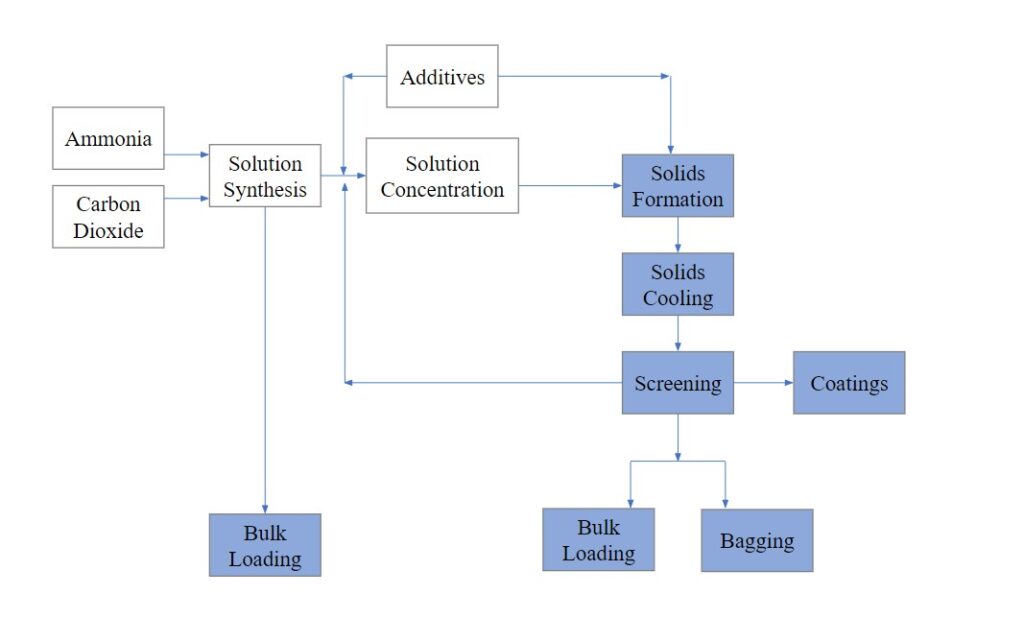
The ammonia is then combined with carbon dioxide under high pressure and temperature. This first forms ammonium carbamate, which then decomposes into urea and water. Several methods (vacuum concentration, evaporation, and crystallization) are used to concentrate the urea solution, turning the melted urea into a solid.
In the final solid-formation stage, the melted urea is turned into one of two physical forms: granular or prilled. After the solids cool, they go through a screening stage to sort particles by size, then get coated, and are finally packed for bulk loading or bagging.
Granular vs Prilled Urea
Solid urea comes in two physical forms: granular and prilled. Granular urea is made by cooling molten urea on a plate and crushing it into particles, typically 1–4 mm across. Prilled urea is made by spraying molten urea droplets from a prilling tower, producing smaller, rounder particles, typically 0.85–2.8 mm across.
For a full comparison of properties, uses, and which one fits your needs, see our guide to urea types.
Is Urea the Same as Nitrogen Fertilizer?
Urea is a type of nitrogen fertilizer, but "nitrogen fertilizer" is a broader category that also includes ammonium nitrate, ammonium sulfate, and others. Urea isn't nitrogen itself, it's a compound that contains nitrogen (about 46% by weight) in a stable, solid form that plants and soil bacteria can convert into usable nitrogen.
So urea and nitrogen aren't the same thing, but urea is one of the most common and concentrated ways to deliver nitrogen to soil.
What Is Urea Used For?
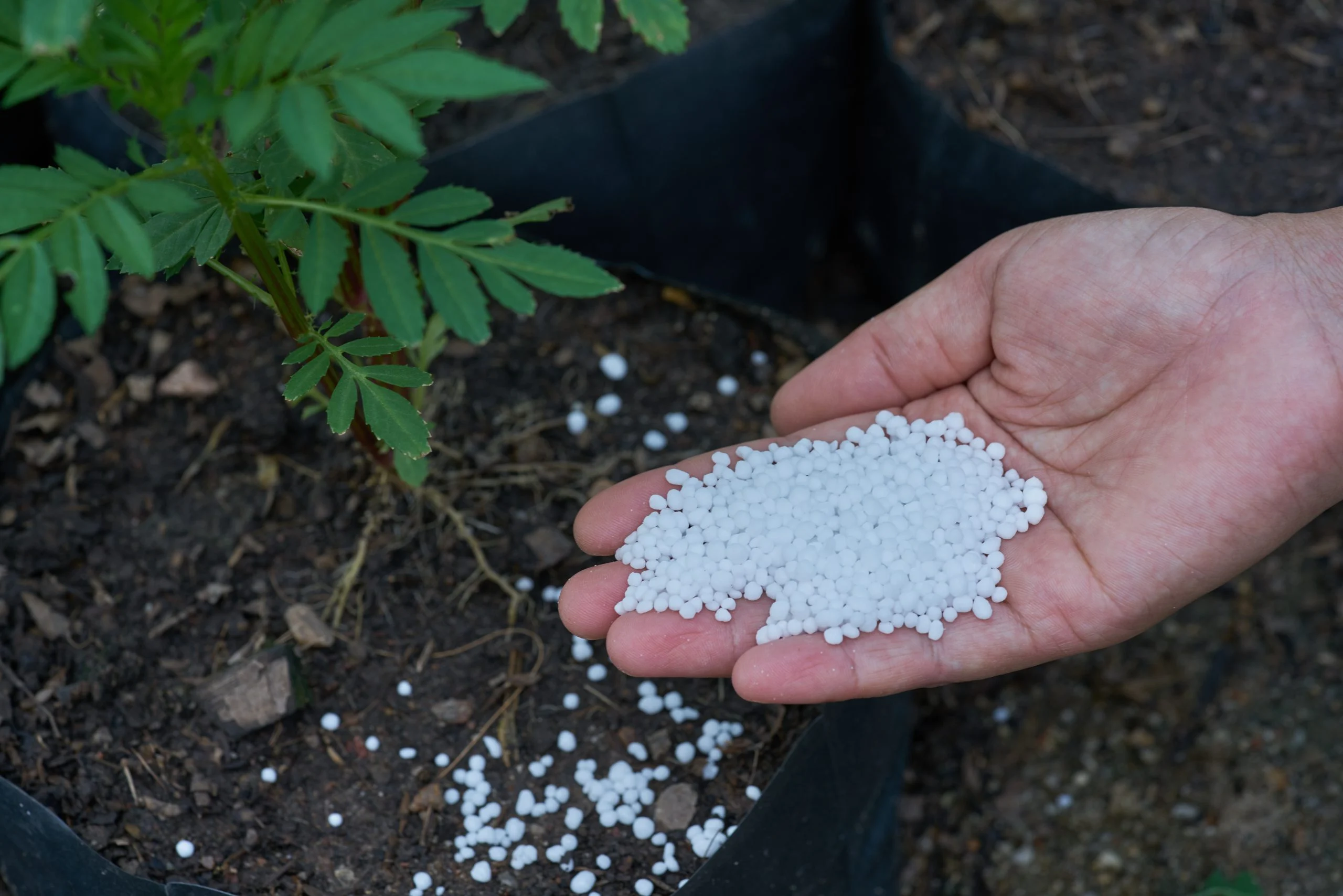
Urea's main use is as a nitrogen fertilizer in agriculture, but it also shows up in plastics, diesel exhaust fluid (DEF), adhesives, soaps, and other industrial products. For the full picture of urea's uses across agriculture and industry, see our guide to urea uses and applications.
Advantage of Urea
High Nitrogen Content: Urea's 46% nitrogen content means lower storage, transport, and handling costs per unit of nitrogen compared to other dry fertilizers.
Environmentally Friendly: Producing urea releases relatively few pollutants compared to some other fertilizers.
High Efficiency: When applied correctly, urea's nitrogen-delivery efficiency is higher than alternatives like potassium nitrate or calcium nitrate.
Safe to Use: Urea fertilizer doesn't pose a significant fire or explosion risk under normal handling conditions.
Disadvantages of Urea
Urea does have some drawbacks worth knowing. It is volatile and can evaporate into the atmosphere, reducing fertilizer effectiveness. This can lead to nitrogen loss.
As urea converts to ammonium, it may slightly lower soil pH. Improper application can also cause ammonia air pollution and, less commonly, water pollution.
Urea is corrosive to skin and eyes. Under certain high-temperature conditions, it may also pose a fire or explosion risk, so it should be handled with care.
Urea Storage
Store in a Dry, Cool Place: Moisture causes urea to cake into lumps, and high temperatures can decompose it into ammonia gas, both reduce its effectiveness.
Keep Away from Other Chemicals: Urea can react with nitrates, chlorine, and acidic materials, potentially releasing toxic fumes or causing fire.
Use Appropriate Containers: Store urea in corrosion- and leak-resistant containers, tightly closed to keep out moisture.
Urea Handling
Wear Appropriate Personal Protective Equipment (PPE)
Protect the eyes, skin, and respiratory system. This includes safety glasses, gloves, and a respirator mask if necessary.
Carry with Care
If it is hit during handling, it may spill and cause contamination.
Use Appropriate Equipment
The equipment should be clean and free of contaminants to prevent any chemical reactions or contamination.
Urea and its Effect on Health
Following safety guidelines minimizes health risks when handling urea. Inhaling high concentrations can irritate the eyes, nose, throat, and respiratory system, use proper respiratory protection. Skin contact can cause irritation, redness, or itching, so wear gloves and protective clothing when handling it.
Frequently Asked Questions about Urea
What does urea mean?
Urea refers to a nitrogen-containing organic compound, CO(NH₂)₂, used mainly as a solid fertilizer. It's also labeled "Nitrogen 46%" because of its high nitrogen content.
Is urea made from petroleum?
Urea is produced from ammonia and carbon dioxide. The ammonia is typically made from natural gas, which makes urea a petrochemical-derived product, though it isn't made directly "from petroleum" in the way that term is often used.
Where does urea come from?
Urea is manufactured industrially by reacting ammonia (made from natural gas via the Haber-Bosch process) with carbon dioxide under high pressure and temperature.
Is urea a fertilizer?
Yes. Urea is one of the most widely used solid nitrogen fertilizers in the world, valued for its high nitrogen content and relatively low cost per unit of nitrogen.
What is urea's molecular weight?
Urea has a molecular weight of about 60.06 g/mol.
Comments
Loading comments...
Share your thoughts...
Share this article
Latest
From the blog
Curious to see more, discover more articles, and stay up-to-date?
Urea fertilizer comes in two main types: prilled and granular. Prilled urea dissolves quickly and works well for direct use, while granular urea is stronger and better for bulk storage and long shipping. Urea can also be coated or uncoated with a formaldehyde-based agent, which affects its strength and where it can be used. This...
Urea is best known as a nitrogen fertilizer, but that's only one of its uses. It's also a key ingredient in plastics, wood adhesives, diesel fuel additives, skincare products, and more. Whether you're a farmer, a manufacturer, or just curious about where urea shows up, this guide covers its main uses across agriculture and industry....