Urea
Urea Types: Prilled vs Granular Urea
Urea fertilizer comes in two main types: prilled and granular. Prilled urea dissolves quickly and works well for direct use, while granular urea is stronger and better for bulk storage and long shipping. Urea can also be coated or uncoated with a formaldehyde-based agent, which affects its strength and where it can be used. This guide compares both types side by side, so you can choose the right urea grade for your project.

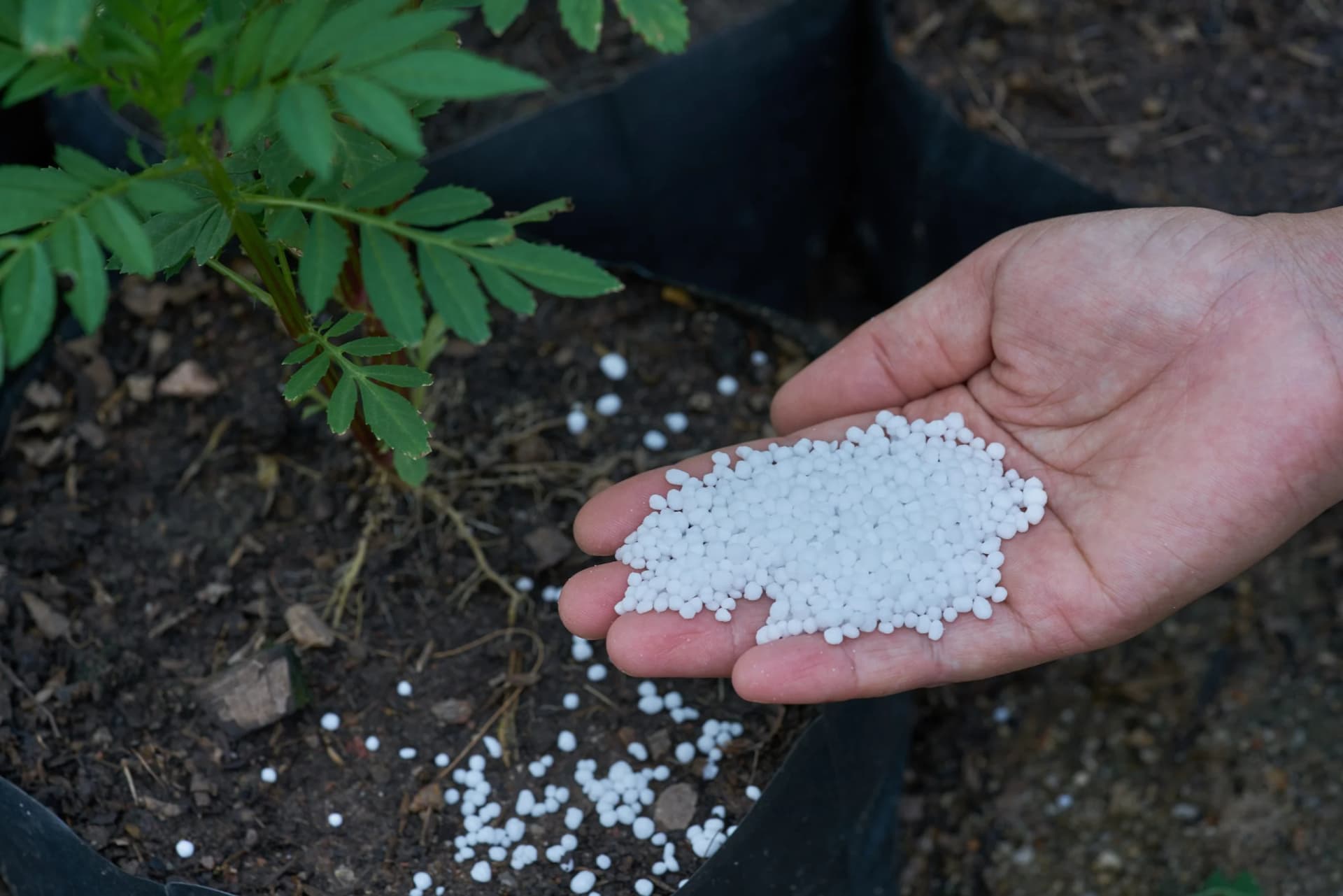
Urea fertilizer comes in two main types: prilled and granular. Prilled urea dissolves quickly and works well for direct use, while granular urea is stronger and better for bulk storage and long shipping. Urea can also be coated or uncoated with a formaldehyde-based agent, which affects its strength and where it can be used.
This guide compares both types side by side, their properties, how each is made, and how to choose the right urea type and grade for your project.
What Is Prilled Urea?
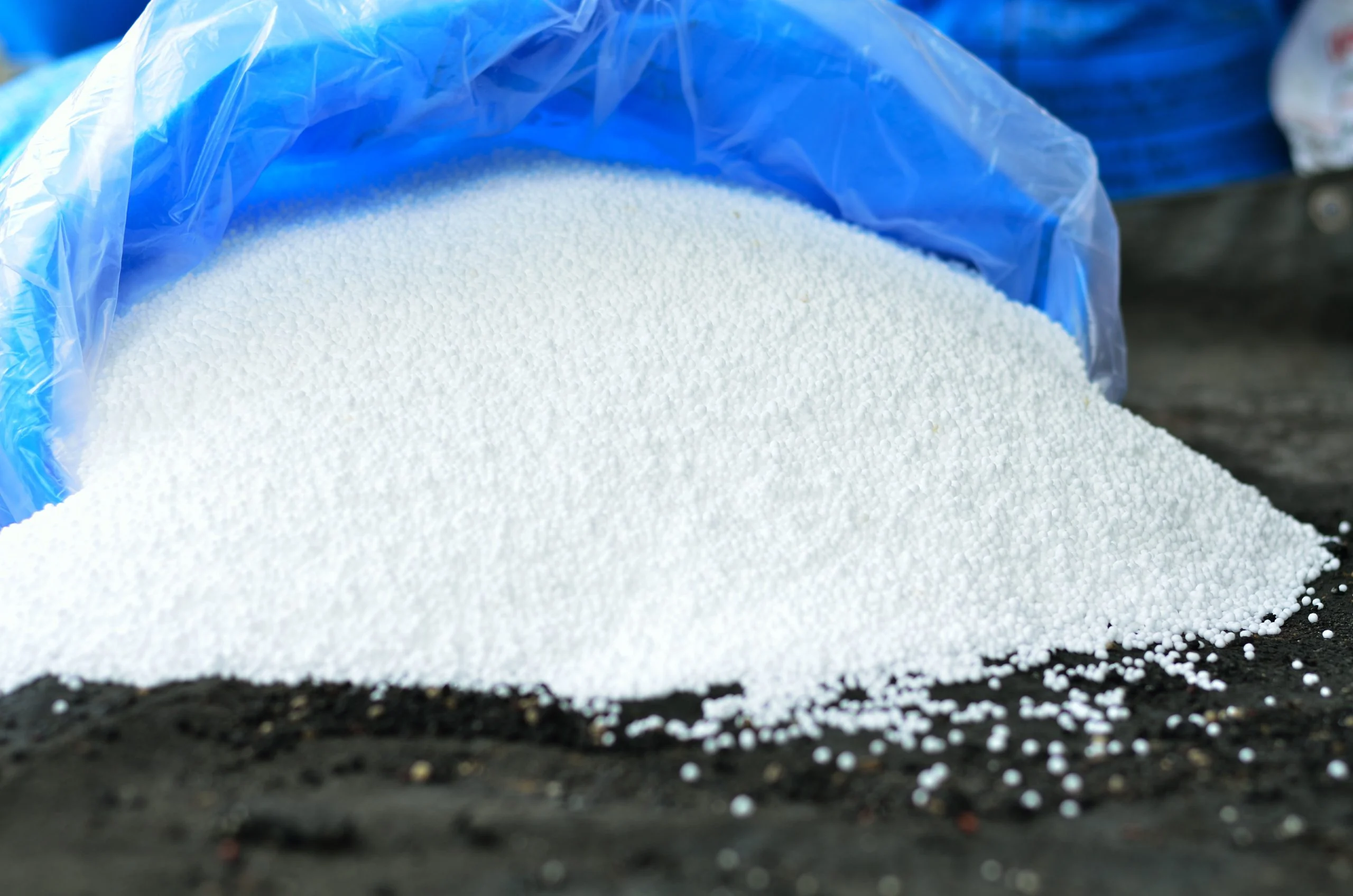
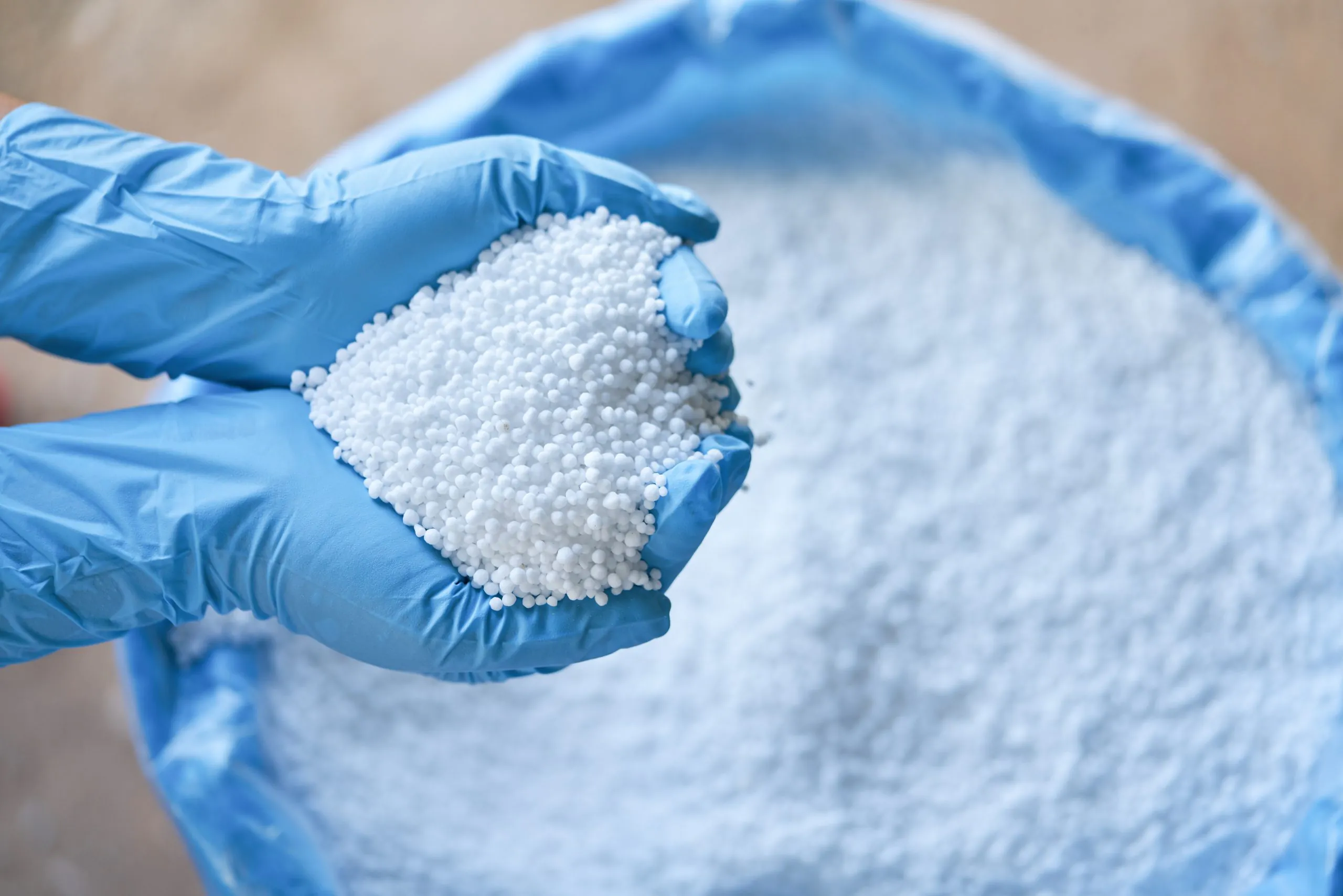
Prilled urea is a nitrogen-rich solid fertilizer made of small, round particles known as prills. It contains around 46% nitrogen and dissolves quickly in water, which makes it a fast-acting nitrogen source for plants, liquid fertilizer blends, and deicing applications.
Prilled urea is more commonly used today to resist breaking down when mixing with other fertilizer components like potassium chloride.
It is also known as ice-melting or deicing urea since it can reduce ice efficiently, even at very low temperatures (-6°C).
Physical Properties of Prilled Urea
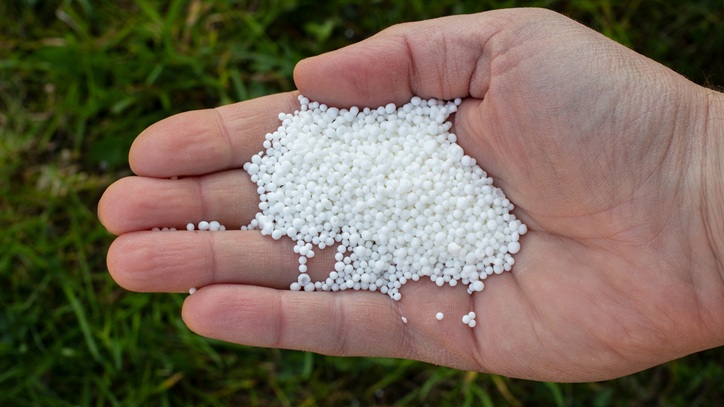
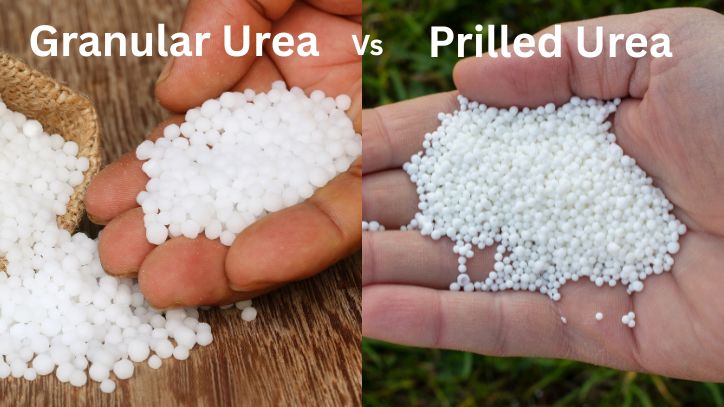
Prilled urea forms small, round particles. These particles have a large surface area. This helps water reach the urea faster, so it dissolves quickly.
Rain can wash away or break down some fertilizers fast. Prilled urea resists this well. It stays in the soil longer, so you apply it less often.
How Prilled Urea Is Made
Prilled urea is produced in a prilling tower. Molten urea is sprayed from nozzles at the top of the tower, and the droplets fall freely through a rising current of cool air. As the droplets fall, they cool and harden into small, round prills, which are collected at the bottom of the tower. This process is what gives prilled urea its smooth, spherical shape and larger surface area compared to granular urea.
Prilled Urea Applications
- Direct use on soil or through irrigation, as a nitrogen fertilizer
- Used in NOx control systems, to reduce pollution from diesel engines
- Used as a nitrogen source in liquid fertilizers
- Used to melt snow and ice on runways
- Used in animal feed
- Used in some medicines
What Is Granular Urea?
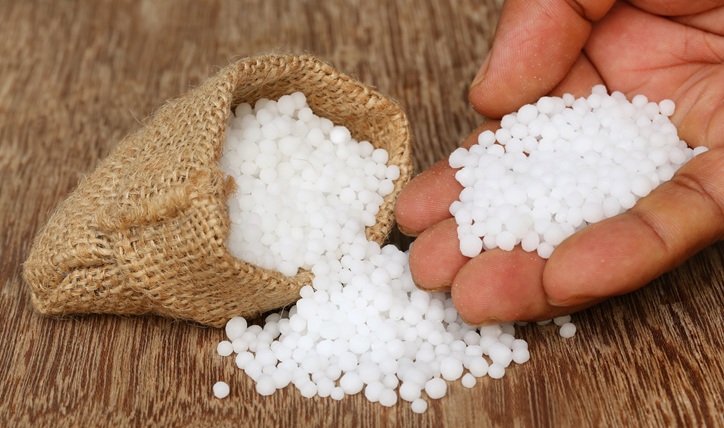
Granular urea is a nitrogen-rich solid fertilizer with larger, irregular particles built by layering concentrated urea solution onto seed particles. Like prilled urea, it contains around 46% nitrogen, but its size and hardness make it better suited for bulk storage, blending, and long-distance shipping.
You can use granular urea directly on soil, or mix it with phosphate and potash for a complete plant fertilizer. It works well with standard spreading equipment.
Physical Properties of Granular Urea
Granular urea has bigger particles and an uneven shape. It is stronger than prilled urea and less likely to break.
It releases nitrogen slowly. It can be a rich source of nutrients for plants. You can check the Urea page, to read the granular urea specifications.
How Granular Urea Is Made
Granular urea is made with a different method than prilling. Small urea seed particles are kept moving inside a rotating drum or fluidized bed, while a concentrated urea solution is sprayed onto them in layers.
Each layer adds size and mass to the particle, building up a larger, denser, and less uniform granule. This layering process is what makes granular urea harder and more resistant to breaking than prilled urea.
Granular Urea Application
- Raw material for other fertilizers production
- Manufacturing of melamine used in melamine-methanal resins (used for the synthesis of melamine through a chemical reaction involving urea and formaldehyde.)
- Formation of important resins (urea-formaldehyde resin)
- Use in reducing air pollution from diesel engines in cars, buses, and lorries
Prilled Urea vs Granular Urea: Comparison Table
| Property | Prilled Urea | Granular Urea |
|---|---|---|
| Size | 1–2.4 mm | 2–4 mm |
| Nitrogen Content | ~46% | ~46% |
| Color | White or light gray | White |
| Shape | Spherical | Irregular |
| Hardness | Softer | Harder |
| Solubility | Highly soluble | Highly soluble |
| Odor | Odorless | Odorless |
| Best For | Direct soil application, liquid blends, deicing | Bulk storage, blending, long shipping |
Which Urea Type Should You Choose?
Choosing between prilled and granular urea depends on how you plan to use it. Prilled urea dissolves faster, making it a good fit for irrigation systems, liquid fertilizer blends, and applications like deicing where quick action matters.
Granular urea, being harder and more resistant to breaking, holds up better during long-distance shipping, bulk storage, and blending with other granular fertilizers like phosphate and potash. If fast nutrient release is your priority, prilled urea is usually the better choice; if you need a durable product for bulk handling, granular urea is the stronger option.
Coated vs Uncoated Urea
Some urea is treated with a urea-formaldehyde compound during production. This treatment, sometimes called conditioning, makes the prill or granule harder and less likely to break apart or clump during storage and shipping.
Uncoated urea contains little to no formaldehyde. This matters for applications like DEF (diesel exhaust fluid / AdBlue) and other technical uses, where formaldehyde content must stay below strict limits.
Coated urea is treated with a higher concentration of the same compound, giving it extra hardness and caking resistance for long-distance shipping and bulk storage, at the cost of not meeting the strictest formaldehyde-free specifications.
Our Available Urea Grades
| Grade | Type | Formaldehyde | Nitrogen | Best For |
|---|---|---|---|---|
| Uncoated Prilled Urea 46% – Zero Formaldehyde (Technical Grade) | Prilled | None | 46% | DEF/AdBlue and other formaldehyde-sensitive technical applications |
| Uncoated Prilled Urea 46% – Low Formaldehyde (Technical Grade) | Prilled | Low / residual | 46% | Technical applications with less strict formaldehyde limits |
| Coated Prilled Urea 46% (Technical Grade) | Prilled | Higher (coated) | 46% | Maximum hardness and anti-caking for storage and long shipping |
| Coated Granular Urea 46% | Granular | Coated | 46% | Standard bulk fertilizer blending and long-distance shipping |
Using Urea for Plants
Urea's high nitrogen content (~46%) makes it one of the most widely used fertilizers for plant growth, and both prilled and granular forms work equally well once applied. Prilled urea's faster dissolving rate makes it a common choice for quick-acting irrigation blends, while granular urea's slower release suits standard soil application. For a full breakdown of how urea feeds plants and its use across other industries, see our urea applications guide.
In this article, we explained different types of urea. If you have any questions about other differences that we did not cover, please leave a comment.
Comments
Share your thoughts...
Latest
From the blog
Curious to see more, discover more articles, and stay up-to-date?