Bitumen
Weekly Bitumen Report: US-Iran Talks Remain Deadlocked, Hormuz Strait Still Closed; Brent Returns to Nearly $89
US-Iran talks remain deadlocked as Hormuz Strait traffic stays severely restricted, while renewed Red Sea attacks add to maritime risk. Brent returned toward $90/bbl amid tightening supply expectations. Bitumen markets diverged, with Europe correcting lower while Asia remains supported by tight supply.

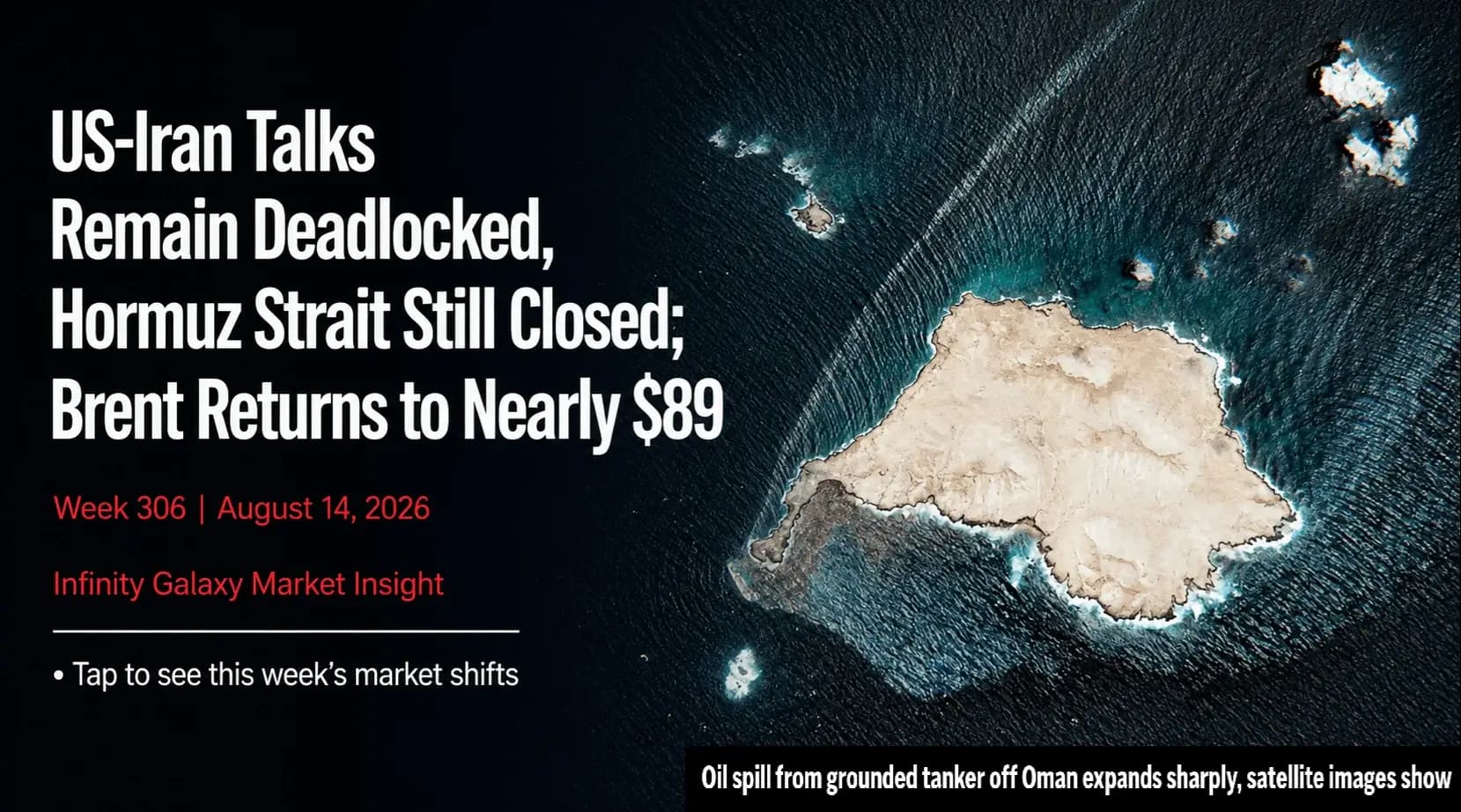
The market faced a clear contradiction this week. On one side, mediators continue to carry messages between Tehran and Washington; on the other, Iran says there has been no progress toward reviving the temporary agreement. The deadlock is visible in Hormuz Strait traffic: Kpler recorded only eight vessel transits on 10 August. Tehran continues to link a full reopening of the strait to acceptance of its conditions, while President Trump claims the United States controls Hormuz Strait. For the market, this disagreement has increasingly become a security and operational issue rather than simply a political one.
Red Sea Route: Shipping Risk Moves from Threat to Human Losses
Pressure is no longer limited to Hormuz Strait. A Houthi attack on the Tihamah near Bab el-Mandeb, at the southern entrance to the Red Sea, killed four crew members and two rescuers, marking the first confirmed fatalities from Houthi attacks on commercial shipping since the current war began. At the same time, the United States targeted the Vela Nova in the Gulf of Oman over an alleged attempt to breach the blockade on Iranian ports. Adding to the maritime risk, an oil tanker carrying nearly one million barrels of Russian crude leaked near the Omani islands, creating a large oil slick.
The Global Oil Supply Map Is Gradually Changing
The latest IEA warning suggests the market is dealing with more than a war-risk premium. The International Energy Agency now expects global oil supply to decline by around 4.3 million barrels per day in 2026, leaving the market with an estimated supply deficit of approximately 1.3 million barrels per day. Buying patterns are changing as well: the United States is heading toward its highest Middle East crude imports since the war began, while two Indian refiners have also entered the market to secure additional oil supplies. In the US, annual inflation eased to 3.4% in July, reducing expectations of another Federal Reserve rate increase in September, although higher energy costs could still bring renewed inflationary pressure.
Brent Oil: The Market Is Again Pricing Supply Risk
The shift in expectations pushed the Brent Oil Price back toward $90 after trading near $80 the previous week. Brent briefly reached around $90 per barrel on 12 August before easing back toward $88. The move was driven mainly by fading expectations of a rapid political agreement, sharply reduced Hormuz Strait traffic, renewed maritime attacks, and the IEA warning over a potential global supply shortfall.
East Asia: Fuel Oil Rises Again While Singapore Bitumen Holds Firm
According to international market assessments, Singapore 180 CST fuel oil increased to around $571 per metric ton, while Singapore Bitumen remained near $622 per metric ton and South Korea Bitumen traded around $532 per metric ton.
The China Bitumen Market remains relatively quiet because of rainfall and weak project activity. However, tight regional supply has created more export opportunities for southern China. As a result, China currently has a stronger position in the export market than in its own domestic market.
India Bitumen: Demand Remains Weak, but the Import Problem Is Unresolved
The India Bitumen Market remains under pressure from the monsoon season. At the same time, state-owned refiners reduced VG30 prices by around $22 per metric ton from the beginning of August, while prices are expected to remain broadly unchanged for the second half of the month. In practice, lower domestic refinery prices are putting additional pressure on importers rather than making imported bitumen substantially cheaper.
European Bitumen Corrects Lower; Bahrain Remains Unchanged
In Europe, lower HSFO prices, summer holidays, and increased supply have pushed Bitumen Prices noticeably lower, with export values now broadly around $480–$510 per metric ton.
Bahrain continues to maintain its price at around $550 per metric ton, although export activity remains extremely limited.
Iran Bitumen Exports Remain Constrained by the Maritime Blockade
In Iran, Bitumen Exports remain severely restricted. Many exporters have shifted toward land routes, while container shipments also remain at low levels. The main issue for the Iran Bitumen Market is therefore still not the quoted price, but the return of a regular and predictable maritime route for loading and moving cargo out of the country.
Insight from Razieh Gilani: In a Volatile Market, Responsiveness Is a Risk-Management Tool
In this kind of market, trust is not built only after delivery. It starts when a seller can clearly explain which parts of a transaction are confirmed, which risks remain open, and when the customer will receive the next update. Correct pricing matters, but when a single headline can change a vessel’s route, availability, fast response, and transparent communication, even when the news is negative, become part of the seller’s credibility. In a volatile market, the customer is not only buying a product; they are also placing part of their risk in the seller’s hands.
For current bitumen prices, cargo availability, and reliable shipping guidance, Contact Us.
Comments
Share your thoughts...
More Reports
Curious to see more, discover more articles, and stay up-to-date?