Bitumen
Weekly Bitumen Report: The Pause in Attacks Did Not Hold; Brent Stayed Above $87 as Middle East Shipping Risk Returned
The ceasefire hopes quickly faded as military operations resumed, keeping Brent above $87 and geopolitical risks high. While Asian bitumen markets remained relatively firm despite weak demand, Europe gained on tighter supply. Iran exports stayed constrained by shipping disruptions, leaving logistics—not pricing—the market’s biggest challenge.

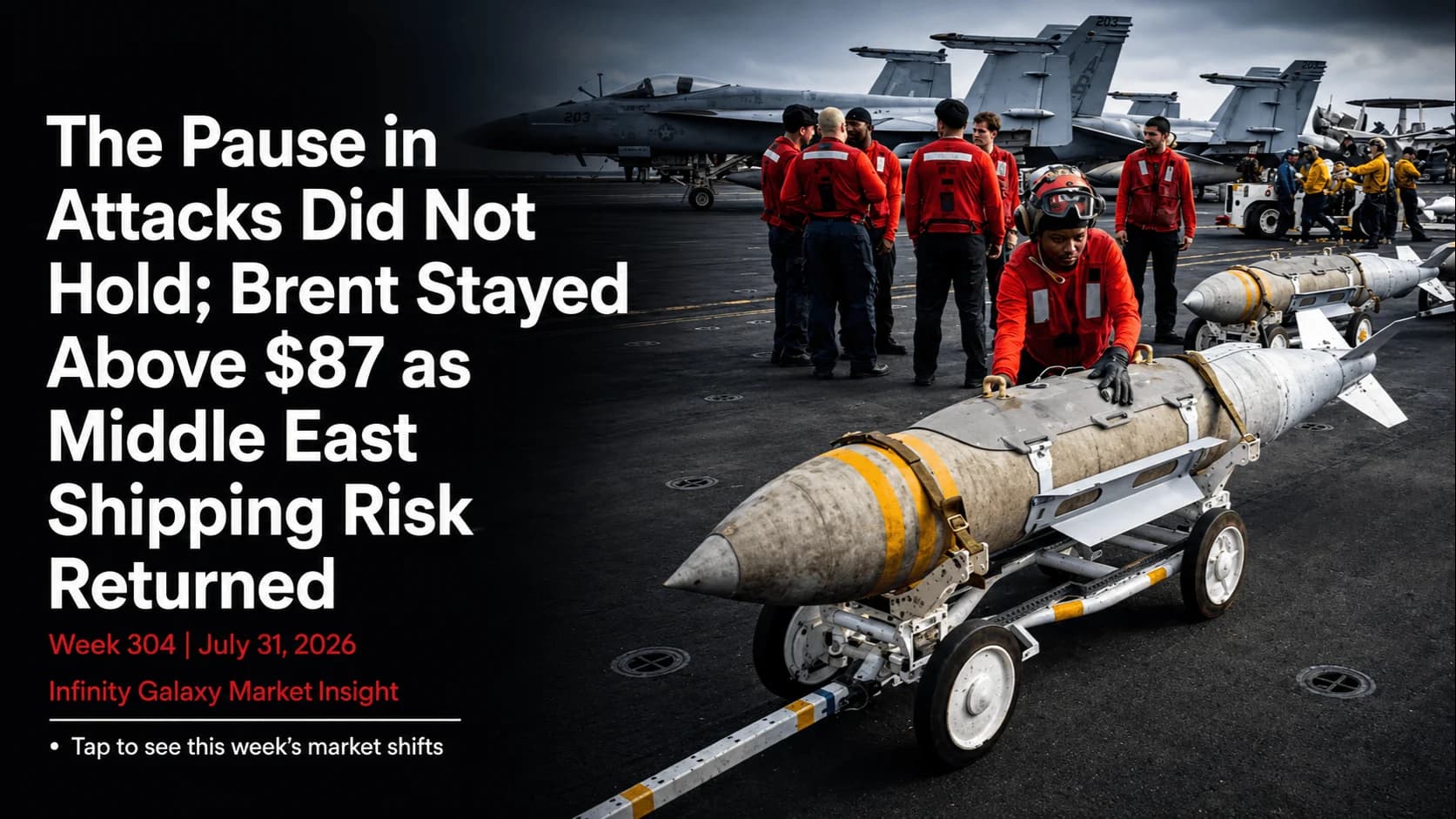
The energy market had only a few days to price in the possibility of de-escalation. The United States temporarily suspended its air operations at the end of last week while regional mediators opened new talks, but the pause ended after Iran launched a missile attack on a US base in Jordan. From 29 July, US strikes on Iran resumed, while American and Saudi forces jointly targeted Iran-aligned groups in Iraq for the first time.
At the same time, the Houthis continued threatening to close the Bab el-Mandeb Strait completely. The passage of 39 vessels through the strait in a single day showed that the Red Sea route remains operational, but under severe pressure.
Benjamin Netanyahu’s visit to Washington and his first face-to-face meeting with Donald Trump since the war began in February also returned Iran to the center of US-Israel discussions.
Meanwhile, Iran rejected Oman’s regional proposal for managing Hormuz Strait, and the US Federal Reserve kept interest rates unchanged at 3.50%–3.75%, limiting expectations of a rapid decline in financing costs.
Brent Oil Price Reabsorbs the War-Risk Premium
The Brent Oil Price jumped by more than 7% after military operations resumed and, despite a limited correction, remained around $89–$90 in early trading on 30 July. Brent’s return above $87 reflected the risk of disruption in Hormuz Strait, attacks on infrastructure and tankers, and rising pressure across the Red Sea route rather than an immediate shortage of crude oil. Limited vessel traffic prevented a sharper increase, but the market has not removed the possibility of further shipping disruption from oil prices.
East Asia Bitumen Market: Fuel Oil Retreats, but Bitumen Holds Firm
According to international market assessments, Singapore HSFO 180 CST moved to around $539 per metric ton, while Singapore Bitumen increased by approximately $3 to nearly $615. South Korea Bitumen remained broadly stable at around $527.
The domestic China Bitumen Market remains under pressure from weak demand, rainfall, and buyer resistance, while a possible increase in production in southern China could add further pressure. In contrast, limited supply across other Asian markets has redirected part of regional demand towards China, leaving the southern China export market stronger than the domestic market.
India Bitumen: Refinery Prices Are Lower, but Imports Remain Expensive
International assessments continue to describe India Bitumen demand as weak during the monsoon season. Despite lower domestic refinery prices, imported cargoes remain expensive because of freight, insurance, and wider Persian Gulf shipping risks. The market is now waiting for Indian refiners’ pricing decisions for 1 August, which could determine whether the next move favours further domestic reductions or a firmer market.
Europe Rises as Bahrain Bitumen Remains at $550
Limited supply and the earlier increase in HSFO pushed European Bitumen prices approximately $50 higher, placing the overall market in a range of around $545-$570 per metric ton. Bahrain Bitumen has remained at $550 for more than six consecutive months, although export activity remains very limited because shipowners are still cautious about passing through Hormuz Strait.
Iran Bitumen: Hopes of Reopening Hormuz Strait Increase
The temporary pause in the conflict raised expectations that Hormuz Strait could reopen. During this period, Iran Bitumen exports continued mainly through land routes and at very limited volumes. As a result, current Iran Bitumen Price indications will only become commercially workable when the maritime route returns to normal and cargoes can once again be loaded and shipped reliably.
Insight from Razieh Gilani at Infinity Galaxy
The Bitumen Market continues to face limited supply and a lack of practical alternatives. If this disruption, now approaching six months, continues, it could reshape the regional supply chain and change traditional bitumen consumption patterns.
Until maritime routes reopen, many quoted prices will remain difficult to execute. The market is still being shaped less by headline offers and more by political decisions, regional tensions, vessel availability, and the ability of reliable suppliers to deliver.
For current bitumen prices, cargo availability, and reliable shipping guidance, Contact Us.
Comments
Share your thoughts...
More Reports
Curious to see more, discover more articles, and stay up-to-date?