East Asia Bitumen Market
East Asia Bitumen Market: Oil Prices Surge Amid Regional Price Adjustments
Brent climbed above $117/bbl, but East Asian bitumen prices moved unevenly. South Korea and South China became more competitive as buyers weighed inventories, project budgets and alternative supply routes.

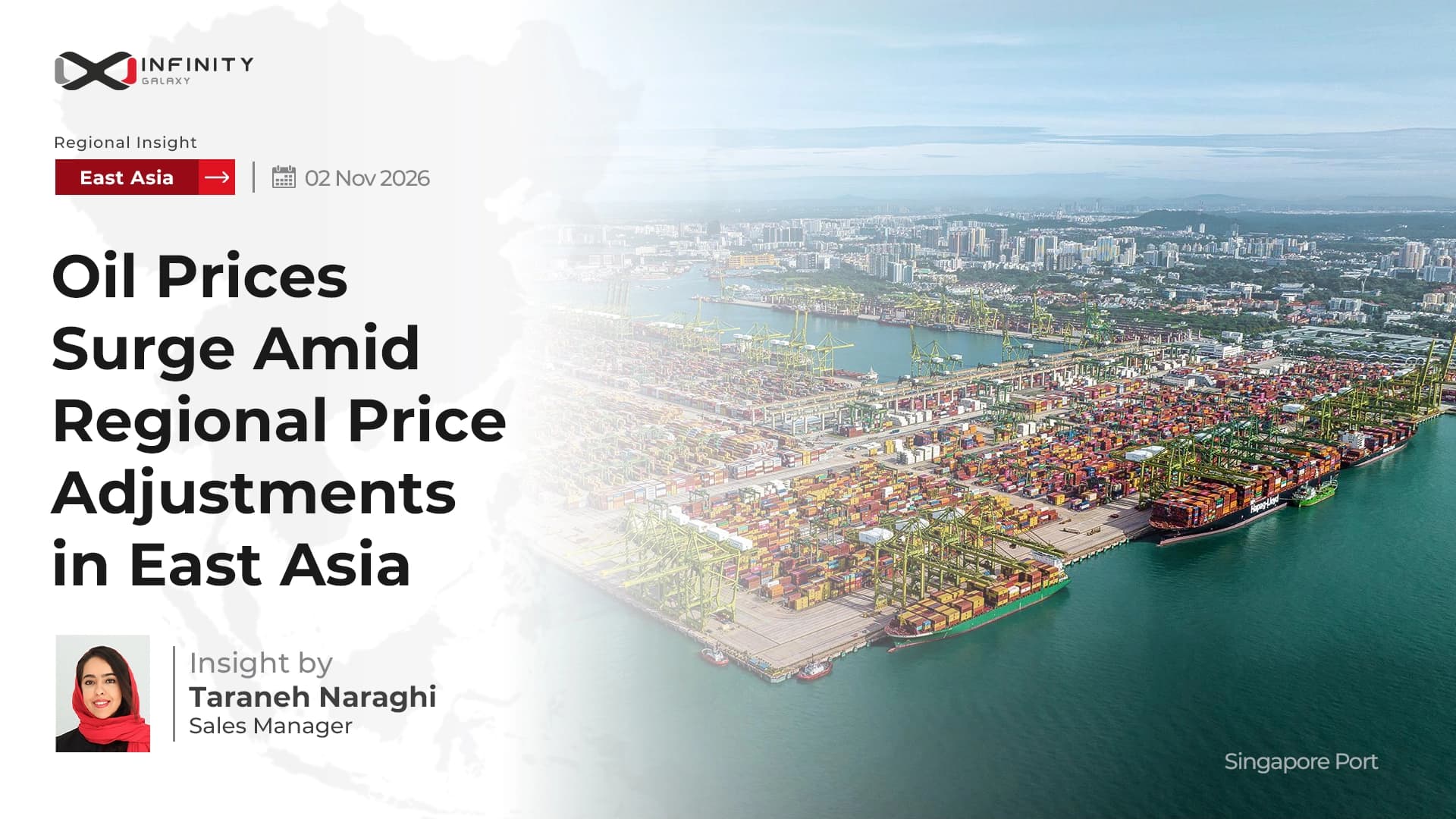
Brent crude traded above USD 117/bbl during the final week of October, while concerns over escalating tensions between Iran and the US continued to influence energy costs and maritime freight. However, the East Asian bitumen market followed a different trajectory, with regional supply dynamics, importer inventory levels, project budget constraints, and competition from alternative origins shaping market sentiment.
The key development this week was the adjustment in Singapore and South Korean prices. Despite elevated crude oil prices, buyers remained selective, focusing on actual cargo availability, competitive offers, loading schedules, and logistics risks when evaluating November and December requirements.
Singapore | Prices Adjust Amid Strong Market Fundamentals
FOB Singapore prices stood at USD 847–857/MT, adjusting by approximately USD 3/MT from the previous week. This marks the first weekly price adjustment since July.
Several importers have already covered their November requirements, while demand for December cargoes remains measured. Meanwhile, competitive offers from Malaysia and South China have provided buyers with additional sourcing options.
Despite the adjustment, Singapore remains a relatively high-priced supply origin. Buyers with immediate requirements may still consider higher-priced offers, depending on cargo availability and delivery schedules.
Malaysia | Steady Demand Amid Budget Constraints
Demand in Malaysia remains moderate to relatively firm, particularly for ongoing year-end road maintenance projects. However, higher import costs from Singapore have encouraged buyers to rely more on domestic production.
Production limitations at certain refineries continue to raise supply concerns. Nevertheless, the approaching rainy season and project budget constraints remain important factors influencing purchasing activity.
Indonesia | Immediate Requirements Support Trading Activity
Demand in Java remains relatively stable, while activity in other regions is comparatively limited. Some buyers continue to negotiate for prompt requirements, although many importers have already secured their November volumes.
Market attention is gradually shifting toward December requirements. Smaller order sizes and the logistics costs associated with multi-destination shipments remain key considerations for importers.
Indonesia continues to offer trading opportunities, with transaction feasibility largely depending on actual volumes, destination ports, and delivery schedules.
Thailand | Limited Export Availability Supports Market Stability
FOB Thailand prices remained broadly stable at USD 840–850/MT.
Production constraints arising from limited feedstock availability continue to restrict export supply. Meanwhile, domestic demand has yet to reach typical year-end levels. Road rehabilitation activities following recent floods are ongoing, although importers remain selective in their purchasing decisions.
Thailand remains a relevant sourcing option for regional buyers, subject to confirmation of actual cargo availability.
Vietnam | Importers Focus on Existing Stocks and December Requirements
Several Vietnamese importers have already covered their November requirements through supplies from South China and other origins, reducing the urgency for additional purchases.
High bitumen prices, contractor budget limitations, and rainfall in central and southern regions continue to influence consumption.
Competitive offers from China and Taiwan are providing alternatives to Singapore-origin cargoes, with final purchasing decisions largely dependent on delivered costs and arrival schedules.
South Korea | Export Competitiveness Improves
South Korea recorded the most significant price movement in East Asia this week, with FOB prices standing at USD 774–790/MT, approximately USD 33/MT below the previous week.
November export tender results indicated greater pricing flexibility among suppliers seeking to secure regional demand. A considerable share of available volumes is expected to be directed toward China.
The adjustment has improved South Korea's competitive position in regional sourcing calculations, making it an increasingly attractive option depending on product specifications, availability, and freight costs.
China | Competitive Export Offers Create Regional Opportunities
The Chinese market remained mixed during the final week of October. Demand in eastern and northern regions softened with the approaching winter season, while southern China maintained relatively stable activity.
South China export prices were reported at approximately USD 820–840/MT FOB, around USD 10/MT below the previous week. Some suppliers offered more competitive terms to attract buyers and manage inventories.
Together with South Korea, South China continues to provide additional sourcing alternatives for Southeast Asian importers. However, purchasing decisions remain closely linked to actual demand, available budgets, and delivered costs.
CIS & Central Asia | Land-Based Logistics Remain Important
Higher maritime freight costs and transportation risks associated with Iranian shipments continue to highlight the importance of land-based and rail transportation routes.
Border restrictions and rising logistics expenses have made delivery reliability and transit time increasingly important considerations for Central Asian buyers.
Infinity Galaxy offers Iranian- and Iraqi-origin bitumen for CIS and Central Asian destinations in 1 MT Jumbo Bags inside Steel Cages. Origin and transportation routes can be selected according to destination requirements and actual shipment feasibility.
RAIL TO CHINA | CIS Rail Route Remains Active
Rail-based exports of certain bitumen cargoes to China through CIS countries continued during the reporting week. Meanwhile, containerized sea shipments to China faced higher freight costs.
Jumbo Bag offers from Tehran are also present in the market; however, these do not confirm the availability of direct rail loading from Tehran or Isfahan to China.
The CIS-to-China rail route remains an identifiable trading channel, while direct Tehran-to-China or Isfahan-to-China rail loading has not yet been verified in the available market data.
Market Insight by Taraneh Naraghi | Infinity Galaxy
The key takeaway from the final week of October is that higher crude oil prices do not necessarily translate into parallel price increases across all regional bitumen markets.
While energy costs and logistics risks remain elevated, Singapore has undergone a limited price adjustment, South Korea has regained export competitiveness, and South China continues to offer attractive alternatives.
This divergence highlights the growing importance of inventory positions, project financing, regional supply capacity, and freight economics alongside feedstock costs.
For East Asian buyers, the current market offers opportunities to compare alternative origins and optimize procurement strategies. Ultimately, the strongest trading advantage lies not simply in securing a lower price, but in obtaining the right product through a reliable supply route and within the required delivery window.
Comments
Share your thoughts...
More Reports
Curious to see more, discover more articles, and stay up-to-date?