Bitumen
Weekly Bitumen Report: Two Chokepoints, One Crisis: Hormuz Strait Unstable as the Red Sea Route Comes Under Pressure
Hormuz remains unstable as Saudi Arabia’s alternative pipeline and Red Sea routes also face disruption. This week’s bitumen market saw rising costs, stronger prices in Asia and India, while Europe stayed calmer and Iran faced growing shipping challenges.

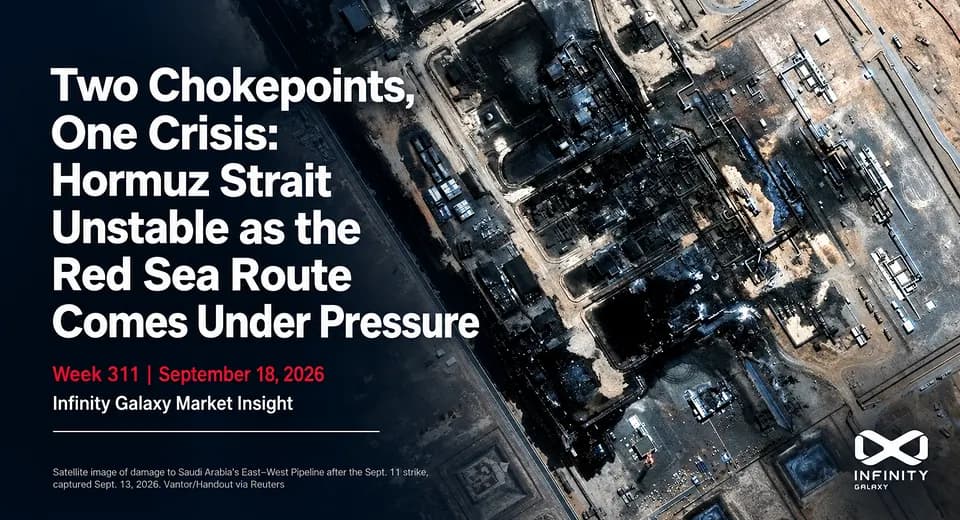
This week, the Middle East energy crisis entered a new phase in which the problem is no longer limited to passage through the Hormuz Strait. Saudi Arabia’s East-West pipeline, which in recent months had carried a significant share of the country’s crude to the Red Sea port of Yanbu as an alternative to the Hormuz Strait, was disrupted after attacks on two pumping stations.
The pipeline has a capacity of around 4 million barrels per day. At the same time, Houthi advances along Yemen’s coast have increased pressure on the Red Sea route. Saudi Arabia has also offered some crude cargoes to customers through ship-to-ship transfers near Oman, but this alternative can replace only part of the lost supply. In practice, the alternative route to the Hormuz Strait has itself become part of the crisis.
Hormuz Strait Is Neither Fully Open nor Fully Closed
The latest Kpler data highlights this instability. Only three commercial vessels crossed the Hormuz Strait on Wednesday, compared with 12 vessels a day earlier and a 10-day average of around 17 vessels per day. Some ships may have crossed with their AIS tracking systems switched off, but even allowing for these “dark transits,” traffic remains far below normal levels.
Vessel movements along the Red Sea route have also declined. At the same time, executives from Shell and Equinor have warned that the mechanisms that absorbed supply shocks in recent months - from oil inventories and pipeline capacity to shipping flexibility - are gradually weakening.
Brent Near $106: From a Sharp Rally to a Limited Correction
Brent crude, which closed at around $105 per barrel on September 11, climbed close to $110 during the week as supply disruptions intensified and loading operations at Saudi Arabia’s western ports were interrupted. On the morning of September 17, Brent eased back to around $106 per barrel after Saudi Arabia offered additional cargoes through Oman.
For now, this decline looks more like a correction driven by the emergence of an alternative supply route than a sign that the crisis has been resolved. Exports through the Hormuz Strait remain restricted, while Saudi Arabia’s pipeline has not yet returned to normal capacity.
East Asia Bitumen: Fuel Oil Rose Faster, While Bitumen Remained Firm
According to the September 16 Platts report, Singapore 180 CST HSFO was assessed at around $700 per metric ton, while Singapore bitumen stood at around $700 per metric ton and South Korea bitumen at approximately $680 per metric ton. This gap shows that the pressure from higher fuel and energy costs has not yet been transferred fully or simultaneously into bitumen prices.
In China, the latest international market reports indicate that export bitumen from southern China is trading at around $665-670 per metric ton FOB, while domestic prices in eastern and southern China have also increased sharply.
India Bitumen: The Monsoon Is Easing, but Prices Are Rising Faster Than Demand
As rainfall declines, India’s bitumen demand is showing early signs of improvement. However, high imported cargo prices are keeping some contractors out of the market, while insurance costs and war-related risks continue to make imports from the Middle East more difficult.
From September 16, Indian refiners increased VG30 prices by around $28 per metric ton and VG40 by around $30 per metric ton. This is the second price increase in September, and its magnitude is almost twice the adjustment seen at the beginning of the month. For now, refinery prices in India are rising faster than actual consumption is recovering.
Europe Remains Calmer; Bahrain Bitumen Holds Steady
In Europe, demand remains below expectations for the peak season, while increased supply from Spain continues to put pressure on bitumen premiums. However, higher HSFO values have pushed outright prices upward. The latest market reports place European export prices in a range from around $550 per metric ton FOB Turkey and the Mediterranean to approximately $572 per metric ton FOB Rotterdam.
In Bahrain, the official bitumen price remains unchanged at around $550 per metric ton. However, this price stability does not indicate normal export conditions, as the ongoing crisis in the Hormuz Strait continues to create serious constraints for Bahrain bitumen shipments.
Iran Bitumen: Prices Remain Competitive, but Export Routes Matter More
Despite the wide price gap between Iranian bulk bitumen and East Asian suppliers, many shipowners remain cautious about loading from Iranian ports, while container shipments continue to face long delays. As a result, road and rail exports to neighbouring countries have become increasingly important.
Under current conditions, Iran’s price advantage becomes meaningful only when the shipping route, delivery time and final landed cost are also reliable.
Insight from Razieh Gilani: Today’s Customer Is Not Buying Only a Price, They Are Buying Certainty
In a stable market, a few dollars of price difference can determine a deal. But in a market like today’s, customers first want to know what can actually be executed.
A credible seller does more than quote a price. They remain available after quoting, explain changes in routes or costs quickly, and offer alternative solutions before a problem develops. In this kind of market, trust is no longer an added value - it has become part of the price itself.
For current bitumen prices, cargo availability, and reliable shipping guidance, Contact Us.
Comments
Share your thoughts...
More Reports
Curious to see more, discover more articles, and stay up-to-date?