Weekly Bitumen Report: Trump: No Attack for Now, Hormuz Strait Unsettled, Oil Above $100
Brent remains above $100/bbl as political tensions ease but shipping risks near the Hormuz Strait intensify. Explore the latest bitumen price trends in Asia, India, Europe, Bahrain, and Iran, and see why trade execution matters more than price alone.

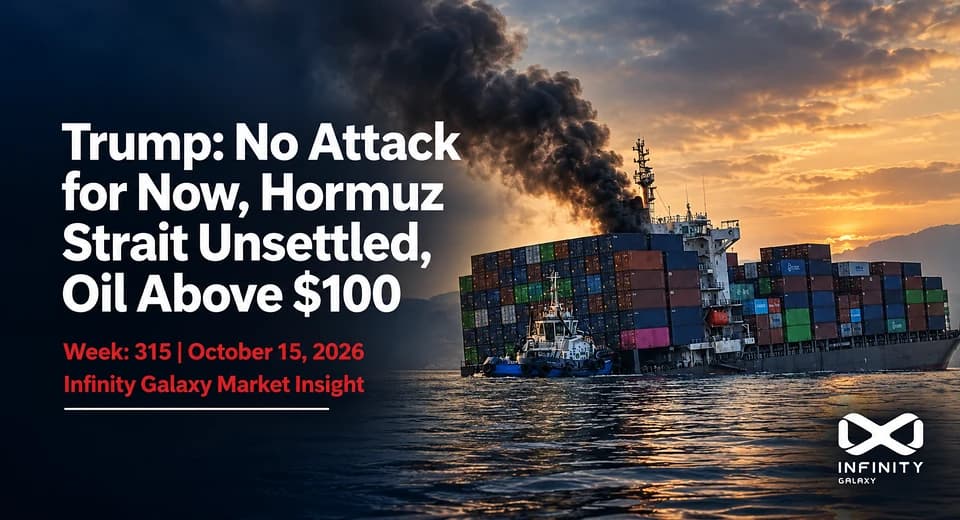
The Oil Market Between Easing Political Risks and Escalating Maritime Insecurity
With Israel’s election on October 27 and the US midterm elections on November 3 approaching at the same time, the market has entered a short but highly sensitive political window. On October 14, Netanyahu said he did not support a pre-emptive attack on Iran before Israel’s election, while Trump had already said on October 8 that the US would not attack Iran before the midterms. These statements have reduced the immediate probability of military action, but the market does not yet see them as the end of the crisis- especially as Houthi attacks on Saudi Arabia have intensified, Riyadh airport has been targeted several times, and an attack on Aramco’s headquarters disrupted staff activity.
Meanwhile, the risk has moved from politics into physical trade. On October 14, a container ship and a bulk carrier sank after being hit by projectiles near the Hormuz Strait, a clear sign that the threat is no longer limited to oil tankers. The United Nations has also warned that unless Washington and Tehran agree within the coming weeks on a mechanism for the safe passage of fertilizer cargoes through the Hormuz Strait, disruption could affect planting seasons and food security in parts of Asia and Africa. At the same time, the US has turned to less conventional sources to ease fuel pressure, with Russia saying it is ready to supply around 300,000 MT of diesel to the US market and other buyers- although the volume is still considered too small to materially change the global diesel balance.
This high-risk environment kept Brent oil above $100/bbl for most of the past week. Brent traded as high as around $106/bbl in recent sessions and, despite falling by roughly 1.5% on October 15, remained close to $104–105/bbl. The market is caught between two opposing forces: higher Middle East supply, reserve releases and US efforts to reduce transport costs on one side; and shipping attacks, Hormuz Strait restrictions, risks to Saudi infrastructure and tight global fuel supply on the other. At the same time, US inflation for September reached 3.7%, while the sharp rise in gasoline prices has brought the possibility of another interest-rate increase back into serious market discussion.
East Asia Bitumen: Fuel Oil Jumps Again, but Supply Still Drives Bitumen
International market reports show Singapore HSFO 180 CST at around $806/MT, while Singapore bitumen was assessed near $810/MT and South Korean bitumen around $790/MT. Unlike previous weeks, when bitumen and fuel oil moved with a wider gap between them, heavy fuel and bitumen are now rising together. International market publications are also reporting higher freight costs and tight vessel availability across Asia, underlining an important point: having product available does not necessarily mean that supply is commercially executable.
China Bitumen: Golden Week Is Over, Projects Are Back, but Supply Still Lags
Following the end of Golden Week, project activity in East China resumed quickly, with demand moving ahead of available supply. At the same time, South China export indications were reported at around $830-850/MT FOB. The key point is that even as business activity returned, low inventories and restricted production prevented prices from easing.
India Bitumen: Demand Is Returning, but Freight Is Slowing Purchases
India has entered the post-monsoon demand period, but imported buying has not yet returned smoothly. Argus notes that many contractors are still struggling to accept higher price levels. At the same time, importer inventories remain low ahead of the new demand cycle, so underlying import demand is still present. The main constraint remains logistics.
Europe and Bahrain Bitumen: Europe Calmer Than Asia; Bahrain Still Constrained by Hormuz
Europe remains more balanced than Asia. Export prices are generally in the range of $570-590/MT, with weekly increases mostly limited to a few dollars. Bahrain, meanwhile, remains around $550/MT, while international market reports indicate that export activity is still constrained by difficulties in moving vessels through the Hormuz Strait.
Iran Bitumen: The Price Gap With Asia Widens, but Route Risk Is Serious
In Iran, the price gap with Asian bitumen remains very wide despite rising feedstock costs. This makes the arbitrage opportunity look highly attractive on paper. But the other side of the equation is shipping risk, which remains significant. In practice, an attractive price spread does not automatically translate into an executable trade.
Insight from Razieh Gilani at Infinity Galaxy: Today, a Good Price Is a Price You Can Actually Execute
With several commercial vessels being targeted and operating conditions across the Middle East becoming more complicated, price alone is no longer the main benchmark. Execution capability and commitment have become more important than the quoted number itself.
At the same time, a seller must remain accessible and responsive. In a volatile market, quick and clear communication helps reduce buyer uncertainty as much as realistically possible-and that responsiveness is becoming an important part of trust.
Comments
Share your thoughts...
More Reports
Curious to see more, discover more articles, and stay up-to-date?